If you’ve ever walked through a large industrial warehouse, manufacturing plant, or even a busy commercial kitchen, you’ve probably noticed rows of heavy-duty fans humming in sync to keep spaces cool, ventilated, and safe. As an industrial fan regulator supplier, I get asked one question more than any other: “Can one of your regulators control multiple fans?” It’s a practical question, and one that makes total sense—from a cost, installation, and maintenance perspective, scaling up a setup without adding extra hardware whenever possible is a huge win for facility managers. But the answer isn’t a simple yes or no. It depends on a few key factors, and over the years, I’ve worked with dozens of clients to navigate exactly this balance. Today, I want to break down how it works, what to watch for, and when pairing a single regulator with multiple fans is a smart move, versus when it’s better to go individual. Industrial Fan Regulator
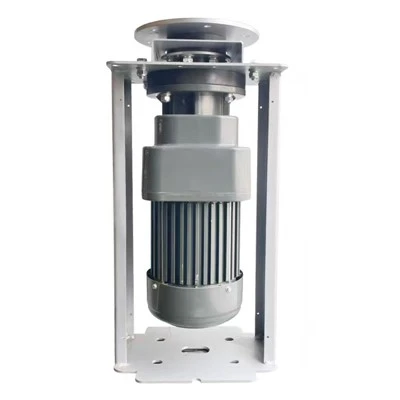
First, let’s start with the basics: what an industrial fan regulator actually does. Unlike the small, consumer-grade regulators you use for bedroom box fans, industrial regulators are built to handle high-voltage, high-amperage loads—sometimes hundreds of amps, for fans that move thousands of cubic feet of air per minute (CFM). Their core job is to adjust the speed of AC induction motors, which are the workhorses of most industrial fans, by modifying the voltage supplied to the motor. Lower voltage equals slower fan speed, higher voltage equals faster speed, which directly impacts CFM, energy use, and even fan lifespan.
Now, the critical part: every industrial regulator has a maximum load capacity, measured in amps (or sometimes kilowatts, which is closely related). That number is non-negotiable. If you exceed it, you risk overheating the regulator, tripping circuit breakers, or even causing permanent damage to the regulator or the fans connected to it. So, the first step in figuring out if multiple fans can run off one regulator is to add up the full load of the fans you want to control. Let’s use a common example: a 1/2 horsepower (HP) industrial exhaust fan draws about 2.5 amps at full speed; a 1 HP supply fan draws about 4.8 amps. If I have a regulator rated for 10 amps, that would safely handle two 1/2 HP fans (total 5 amps, well under 10) or one 1 HP fan, right? Wait, but that’s not the whole story. Because not all industrial fans use the same type of motor—and that changes everything.
Most small to medium industrial fans use single-phase AC motors, which are simpler to wire and pair with regulators. For these, adding a few fans together under one regulator is often a seamless, cost-effective solution. Last year, I worked with a custom furniture manufacturer in Ohio that had a 12,000 sq ft finishing shop with eight 1/3 HP exhaust fans. Originally, they had a separate $150 regulator for each fan, which took up half their electrical panel and required four hours of extra wiring from their electrician. When they came to me, we looked at each fan’s load: 1.5 amps each, so eight fans add up to 12 amps. We installed a 15-amp variable speed regulator rated for single-phase motors, and cut their electrical installation time by 60% while saving them over $800 in hardware upfront. That’s the kind of win that makes this setup so attractive.
But here’s where it gets tricky: three-phase industrial fans, which are standard in larger facilities like metal stamping plants, food processing factories, or warehouses with 20+ foot ceilings. Three-phase motors draw power across three separate lines, and their load calculations work differently than single-phase. If you try to wire multiple three-phase fans to a single regulator, you have to account for not just total amperage, but also power factor—an electrical term that describes how effectively the motor converts power into motion. Low power factor can cause extra strain on the regulator, and even if total amperage is within the regulator’s limit, voltage imbalances across the three lines can damage fans. I once had a client with a 20,000 sq ft metal fabrication shop that tried to pair four 2 HP three-phase fans on a single regulator. Total amperage was 18 amps, which was under the regulator’s 25-amp rating, but the power factor dropped to 0.7, causing the regulator to overheat and fail after three months. We had to replace that setup with individual 10-amp regulators per fan, and they haven’t had an issue since. That’s a mistake I see too often: people looking only at total load, not accounting for motor type and power quality.
Another factor that’s often overlooked is fan sync and performance. If you have two fans pulling air from a single zone, running them at different speeds can create inconsistent airflow—like having one fan blow faster than another, leaving hot spots or stagnant air in corners. That’s a problem for facilities that need uniform ventilation, like pharmaceutical labs or food storage areas that require consistent temperature and air exchange. For example, a craft brewery client of mine wanted to use one regulator for four 1 HP fans in their fermentation room, but their quality control team noted that varying speeds were leading to uneven cooling, which affected beer consistency. Instead, we installed a single master regulator that controls four secondary regulators, so all four fans run at the exact same speed. That’s a middle ground that solves both the cost efficiency of multiple fans and the performance consistency they needed.
Temperature and environmental conditions also play a role. If your facility is in a high-heat area, or has dusty, humid, or corrosive air, regulators run at higher loads get hotter. That extra heat shortens the lifespan of the regulator, even if total amperage is within the rated limit. Last year, a wastewater treatment plant in Texas reached out to me because their outdoor regulator for two 1.5 HP fans kept failing every six months. We inspected their setup and found that the high 100+ degree temperatures in summer were pushing the regulator’s internal temperature 20 degrees above its rated operating limit. We swapped their original 10-amp regulator for a 15-amp model with built-in over-temperature protection, and instead of running two fans, they adjusted to run one slightly larger 2 HP fan with a variable speed setting that matched the airflow of the two original smaller fans. That cut their maintenance costs by 75% and kept their aeration system running reliably.
So, when is pairing multiple fans with one regulator the right call? Let’s summarize the scenarios where it works well: small to medium single-phase fans (1 HP or less) with low total load, in low-stakes environments where airflow consistency isn’t critical, and where upfront cost and simple installation are top priorities. It’s a great solution for small warehouses, retail spaces with ventilation, or small workshops where you don’t need industrial-grade precision at every fan.
When should you stick to individual regulators per fan? For three-phase motors, larger fans (2 HP or more), facilities requiring uniform airflow, high-heat or harsh environments, or setups where fans need independent speed control. For example, a manufacturing plant with 15 ceiling fans in a 50,000 sq ft warehouse might want some fans running slower near loading docks and faster near high-heat production lines. Individual regulators let them adjust each fan to the exact speed they need, instead of being locked into a single setting for all.
As an industrial fan regulator supplier, my advice to every client is to avoid the “one size fits all” approach. First, identify all key details about your setup: fan motor type (single or three-phase), individual and total amperage, required airflow consistency, environmental conditions, and whether you need independent speed control for individual zones. Then, work with a supplier (like me) who can help you run the numbers, not just on paper, but with real-world experience. I’ve seen too many facility managers save a few hundred dollars upfront on a multi-fan regulator setup, only to spend thousands on repairs or re-wiring later. That’s a cost that’s totally avoidable with a little planning.
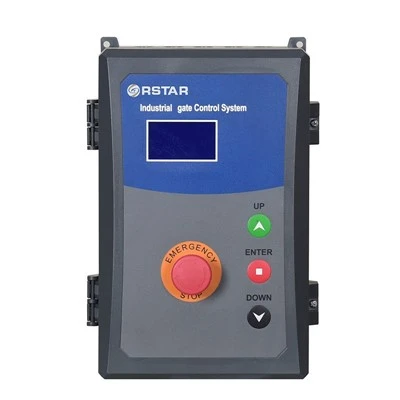
If you’re currently in the process of upgrading your facility’s ventilation system, or tired of dealing with unreliable, overheating regulators, I’m here to help. Whether you’re a small workshop looking for a simple multi-fan solution or a large plant needing precision control for dozens of fans, we can walk through your setup, recommend the right regulators, and make sure you’re compliant with all electrical and safety standards. Reach out today to discuss your project and get a custom quote tailored to your exact needs.
Stretch Wrapper Control System References
- Freris, L. L., & Safaai-Jazi, A. (2014). Electrical Drives and Renewable Energy Systems. Cambridge University Press.
- Fan and Air Movement Association (AMCA). (2021). Industrial Fan Application and Installation Guide. AMCA International.
- National Electrical Manufacturers Association (NEMA). (2020). Standards for Industrial Control Devices and Power Equipment. NEMA.
- U.S. Department of Energy. (2022. Energy Efficiency Improvement and Cost Saving Opportunities for Industrial Motor Systems. U.S. DOE Office of Energy Efficiency and Renewable Energy.
Wuxi Rstar Electric Co., Ltd.
With abundant experience, we are one of the most professional industrial fan regulator manufacturers and suppliers in China. Welcome to wholesale bulk customized industrial fan regulator at competitive price from our factory. If you have any enquiry about quotation, please feel free to email us.
Address: 9th Floor, Building 9, Shengfeng Lianzhi Valley, No.67 Zhujiang Road, Xinwu District, Wuxi City
E-mail: rstarbz@163.com
WebSite: https://www.rstar-wx.com/
