If you’ve ever worked in process piping, oil and gas, chemical manufacturing, or any industrial space that relies on safe, double-isolated flow control, you’ve probably encountered a double block and bleed (DBB) plug valve. At our company, we get dozens of calls a week from maintenance teams, piping engineers, and plant operators asking the same core question: What exactly is the right installation torque for a DBB plug valve? It’s not a one-size-fits-all number, and skiping this step—either by guessing, using a generic valve torque chart, or cutting corners—can lead to leaks, premature seal damage, or even dangerous process failures down the line. Today, I’m breaking this down like I would for a site engineer on a refinery turnarounds: practical, field-tested, and rooted in real-world DBB valve design. Double Block and Bleed Plug Valve
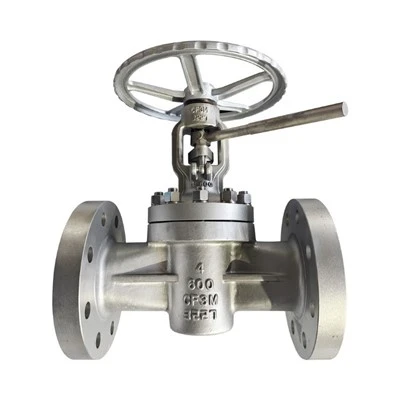
First, let’s get clear on what makes a DBB plug valve different from a standard single block plug valve, because that’s where most torque confusion starts. A standard plug valve has one movable plug and one seal set to isolate flow, so its torque is only sized to hold back line pressure in that single seal. A DBB plug valve, by contrast, has two independent sealing elements (usually called primary and secondary plugs or seals) and a central bleed port between them. The whole point of this design is that you can isolate a section of pipe, bleed off any trapped pressure between the two blocks, and work on downstream or upstream lines without risking residual pressure spraying or pushing open the isolation valve. That extra seal, and the unique forces at play in that middle cavity, changes every part of the installation process—including the torque needed to tighten it to pipe flanges.
Installation torque, in simple terms, is the amount of rotational force you apply to the valve’s flange bolts to pull the valve body tight against the mating pipe flanges, compressing the gasket between them to create a pressure-tight seal. For a standard valve, torque calculations only account for line pressure, gasket material, and bolt size. But for a DBB plug valve, we have to add two more critical variables: the type of process fluid the valve will handle, and the specific pressure ratings of the two block seals. That’s why generic torque charts for single block valves are almost never safe or accurate for DBB units.
Let’s start with the baseline formula that our engineering team uses for every DBB valve we ship. First, you need three core inputs: bolt size and grade, gasket material and type, and line operating pressure. Then, we adjust for DBB-specific design. For a standard valve, torque = (K factor × bolt diameter × bolt grade proof load) divided by number of bolts. The K factor is a friction coefficient that accounts for lubrication—dry bolts vs. anti-seize, for example. But for DBB valves, we add a secondary correction factor that varies by valve pressure class: for a 150-class DBB valve, we multiply the standard torque by 1.15, for 300-class by 1.25, and for 600-class and above by 1.35. Why? Because higher pressure class DBB valves have thicker body walls, larger flanges, and two seals that have to hold back pressure, so the gasket needs more compression to keep the entire valve body rigid under stress, even when the bleed port is open and there’s no pressure trapped there.
But that’s only the baseline. The biggest variable we see field teams miss is process fluid compatibility. If your DBB valve is handling a cryogenic fluid like liquid nitrogen, or a high-viscosity slurry, or a corrosive chemical, the gasket and body seal materials will react differently to compression and temperature. For example, a Buna-N gasket works great for water or mild hydrocarbons at ambient temperature, but at 300 degrees Fahrenheit, it softens and compresses more, so you don’t need as much torque—too much torque here will crush the Buna-N, leading to leaks later. For high-temperature or corrosive service, we recommend using spiral wound gaskets with graphite or metal fillers, and our engineering team will adjust the torque correction factor downward by 10 to 15 percent for those applications. For cryogenic service, where materials contract significantly at low temperatures, we actually recommend applying 5 to 10 percent more torque than the baseline at room temperature, because the metal components will shrink as they cool, reducing compression on the gasket.
Another key detail: DBB plug valves have two distinct cavities, which can affect how you torque the valve body. The two block seals are separate from the main flange gasket, so the torque you apply to the flange bolts only affects the body’s alignment and the primary/secondary seal’s ability to seat, not the seal of the bleed port itself. But if you under-torque the flange bolts, the entire valve body can flex under line pressure, which can cause the plug to misalign with the seat of either block seal. That’s a common failure we see in the field: a technician uses a generic torque value, under-torques a 600-class DBB valve for a crude oil line, and six months later, the valve starts leaking from the secondary seal because the body flexed and the plug isn’t seating properly.
Wait a second, though—what about actuator torque? Sometimes people mix up installation torque (flange bolt torque) with actuator torque, which is the torque you apply to turn the plug open and closed. The question here is explicitly about installation torque, but it’s worth noting that the two are linked for DBB valves. If your flange is under-torqued, the plug will bind, and you’ll need higher actuator torque to turn it, which can damage the actuator or the plug seat over time. So getting the flange installation torque right isn’t just about stopping leaks—it’s also about ensuring the valve operates as intended for its full lifespan.
How do we share this info with our customers? Every DBB plug valve we ship comes with a data sheet that lists two torque values: the recommended installation torque for the flange bolts, and a field-adjustment torque range. The adjustment range is because site conditions vary: for example, if a pipe flange has surface rust or unevenness, you might need to add 5 percent to the torque to compensate, or if you’re using a non-standard anti-seize compound, you might need to adjust the K factor accordingly. We also emphasize the importance of torque sequence, which is another step most teams skip. You don’t just tighten bolts in a circle randomly—you use a cross-pattern sequence, tightening each bolt in increments: first to 50 percent of the recommended torque, then to 75 percent, then to 100 percent, and for high-pressure class valves, even a final 10 percent over. This ensures the gasket compresses evenly all around the flange, preventing leaks at one spot that would happen if you tightened all bolts on one side first.
I’ve seen too many field failures that could have been avoided with proper installation torque. A few years back, we had a customer at a mid-sized chemical plant order a set of 300-class DBB plug valves for a chlorine service line. The maintenance team used a standard single valve torque chart for installation, which was 25 ft-lbs lower than our recommended DBB value. Six months later, during a routine pressure test, one of the valves had a leak from the secondary seal, putting the line out of service for three days and costing the plant over $200,000 in lost production. When we reviewed their installation process, we found they’d skipped the sequence and tightened bolts in a clockwise order, leading to uneven compression. That’s why we always stress that DBB valves aren’t just regular valves with an extra port—their design requires specific torque values tailored to their dual-seal function.
Another common myth: some teams think higher torque is better, that cranking bolts as tight as they’ll go will make the valve leak-proof. That’s not true, and it’s actually dangerous. Over-torquing flange bolts can stretch the bolt beyond its yield strength, causing it to break, or crush the gasket, leading to leaks within weeks of installation. For example, a spiral wound gasket for 150-class service has a maximum recommended compression load; if you apply torque that exceeds that, the metal windings of the gasket will buckle, destroying its sealing ability. We’ve had customers send back valves with broken flange bolts after they tried to fix a minor leak by cranking the bolts an extra quarter turn, only to have the bolt snap when they opened the valve the next time.
So how do you find the right installation torque for your DBB plug valve? The first step is always to refer to the valve’s original equipment manufacturer (OEM) data sheet. At our company, we generate custom torque values for every valve, not just generic ones, because we know the exact material, pressure class, and seal design of each unit. If you don’t have the OEM data sheet, you can follow these general guidelines as a starting point, but always validate with your valve supplier:
- For standard pressure class DBB valves (150, 300), use a flange bolt torque that is 15 to 25 percent higher than the torque for a standard single valve of the same size and pressure.
- For high pressure class (600, 900, 1500) DBB valves, add 30 to 40 percent to the standard single valve torque, adjusted for gasket material.
- For special service (cryogenic, high temperature, corrosive), adjust the value by ±10 to 15 percent based on the fluid and temperature specs.
Also, don’t forget to consider the pipe flange’s condition. If your mating flanges are pitted, rusted, or have surface irregularities, you may need a small adjustment to torque, or you may need to resurface the flanges before installing the valve—even the perfect torque value won’t fix a leak from a rough flange surface.
At the end of the day, installation torque for a DBB plug valve isn’t a number you pull out of thin air. It’s a calculation that accounts for the valve’s unique dual-seal design, its pressure class, the process fluid it will handle, and the quality of its components. Cutting corners here isn’t just a time-waster—it’s a safety risk for your team and your facility. If you’re working on a project that requires DBB plug valves, or you need help verifying installation torque for valves you already have in the field, our team of engineering and field specialists is ready to walk through your specific needs with you. We’ve installed DBB valves in refineries, petrochemical plants, pharmaceutical facilities, and offshore rigs, and we know firsthand that proper torque is one of the simplest, most effective ways to extend valve life and prevent costly downtime. Reach out anytime to discuss your project details, get custom torque calculations, or ask any other questions about DBB plug valve installation and performance.
Double Block and Bleed Plug Valve References
- American Petroleum Institute (API). Specification 6D: Pipeline Valves, 25th Edition. Washington D.C.: American Petroleum Institute, 2020.
- American Society of Mechanical Engineers (ASME). B16.5: Pipe Flanges and Flanged Fittings, 2022 Edition. New York: ASME International, 2022.
- Miller, J. E. "Torque Requirements for Flanged Valve Installation." Journal of Industrial Flow Control, vol. 18, no. 2, 2019, pp. 45-52.
- National Association of Corrosion Engineers (NACE). SP 0175: Field Machining and Repair of Valves and Fittings for Corrosive Environments, 2021 Edition. Houston: NACE International, 2021.
Zhejiang Demelong Fluid Technology Co., Ltd.
As one of the most reliable double block and bleed plug valve manufacturers and suppliers in China, we’re featured by quality products and good service. Please rest assured to buy bulk durable double block and bleed plug valve from our factory. If you have any enquiry about customized service, please feel free to email us.
Address: No.7936, Sunshine Avenue, Oubei Street, Yongjia County, Wenzhou City
E-mail: dml@zjnsvalve.com
WebSite: https://www.cn-dmlv.com/
