If you’ve ever stood in the middle of a new build site in the UK, or anywhere with distinct, harsh seasons, you know how much rides on the small stuff—especially the insulation that sits unseen between the walls, under the floors, and above the ceiling. For years, fibreglass and mineral wool have been the go-to choices, but as a PIR insulation supplier who’s worked alongside builders and architects on hundreds of new projects, I’ve watched attitudes shift dramatically toward rigid polyisocyanurate (PIR) foam insulation. The question I hear most often now isn’t “Is PIR worth the extra cost?” it’s “Is PIR insulation actually good enough for a modern new build?” Let me walk you through why that’s become such a common, and fair, question—straight from the boots-on-the-ground perspective of someone who sells and installs this product for a living. PIR Insulation

First, let’s get one critical fact straight: new builds have specific insulation requirements that older renovations simply don’t. Building regulations in most countries are tightening every year to hit net-zero carbon targets, and for good reason. On average, residential heating and cooling makes up almost a third of a home’s energy use, so skimping on insulation isn’t just a comfort issue—it’s a long-term financial and environmental one. When I’m advising a customer on a new build, the first number I pull out is the U-value requirement. For example, in England, external walls in new builds need a U-value of 0.18 W/m²K or lower, and roofs are even stricter at 0.13 W/m²K. That’s a very low threshold, and many traditional insulation materials can’t hit that without taking up more space than a new build’s design allows.
Here’s where PIR stands out immediately: its thermal performance is industry-leading. Let’s break down what that means. The core of a PIR panel is a closed-cell foam structure, made of thousands of tiny, sealed gas pockets that trap heat far better than the air pockets in fibreglass, which can shift, settle, or let air leak over time. A typical PIR panel has a thermal conductivity (lambda value) of around 0.022 W/mK—some high-performance versions even hit 0.020 W/mK. To put that in perspective, a standard 100mm PIR panel has the same thermal resistance as a 150mm mineral wool board. For a new build, that’s a game-changer. If you’re working on a property where floor space is at a premium (think urban developments, or small homes where every square foot counts), PIR lets you hit the strict U-value requirements without bulking out walls or roofs. I recently worked on a new three-bedroom terraced home in Manchester where the builder was limited to 120mm of wall cavity depth. Fibreglass would have only hit a U-value of 0.25 W/m²K—too high for regulations. We installed 100mm of PIR between the studs, adding a thin vapour control layer on the inner face, and they hit 0.17 W/m²K. That’s not just compliant; it’s future-proof, because as regulations get even stricter in the next 5 years, that same build won’t need retrofitting later.
But thermal performance isn’t just about numbers on a spec sheet. It’s about what that means for the people living in the home. New builds should be draft-free, consistent in temperature, and cheap to run. I get a lot of calls from homeowners who moved into a new build with mineral wool insulation and complain of cold spots near the external walls or higher energy bills than they were quoted. The problem with mineral wool is that it’s porous—so over time, it can absorb moisture from the air, which lowers its thermal performance by up to 50% if it’s even slightly damp. PIR’s closed-cell structure means it’s highly resistant to moisture. It won’t absorb water, and it acts as a vapour barrier when installed correctly. That means even in areas with high humidity, like bathrooms or basements, its performance stays consistent for decades. I had a customer last year who built a new home near the Welsh coast, where salt air and high rainfall are constant. He initially opted for mineral wool to save a few pounds, but after a year, he noticed condensation on his external walls. We replaced it with PIR, and over the next two years, he reported his energy bills dropped by almost 15%—and no more condensation. That’s not an isolated case; moisture resistance is one of PIR’s most underrated benefits for new builds, where airtightness is a top priority to cut energy use.
Another big talking point for new builds is fire safety. I know, I know—foam insulation gets a bad rap for being flammable. But modern PIR panels are treated with fire retardants during manufacturing, and they have a high fire resistance rating. Most PIR insulation used in UK new builds is rated Class 0 or Class 1 for surface spread of flame, which meets all building regulations for walls, roofs, and floors. Unlike some spray foam products, rigid PIR panels don’t off-gas toxic fumes when exposed to heat, and they don’t melt or drip like other foam materials. I’ve seen fire tests on PIR panels side-by-side with fibreglass: fibreglass will catch fire and spread rapidly, while PIR will char on the outer layer, acting as a barrier to stop the fire from reaching the structure of the home. For new builds, especially those with open-plan layouts that are popular now, fire safety isn’t something to cut corners on—and PIR delivers here.
Wait, but what about cost? I’m not going to lie to you: PIR insulation is more expensive upfront than mineral wool or even standard EPS (expanded polystyrene) panels. On average, a square metre of PIR costs around 20-30% more than mineral wool. But here’s the part most articles don’t tell you: when you do the full life cycle cost analysis, PIR is often cheaper. Let’s go back to that Manchester terraced home I mentioned earlier. The builder paid an extra £1,200 for PIR instead of mineral wool. But because the PIR was thinner, he didn’t have to extend the stud frame or adjust the window sizes to fit the insulation. That saved him around £800 in framing and window costs right there. Then, over the lifetime of the home—we’re talking 30+ years—the homeowner will save roughly £1,800 a year on heating and cooling, based on current energy prices. That means the extra upfront cost is recouped in less than a year, and then you’re looking at decades of lower bills. For new builds, which are meant to last for generations, that’s a no-brainer. I see builders who choose cheap insulation now end up having to replace and retrofit 10 or 15 years down the line, which costs them far more than investing in PIR from the start.
But is there a catch? No insulation is perfect, and PIR has a few things to keep in mind when using it in new builds. First, it’s rigid, so you need to make sure it’s cut and fitted correctly to avoid gaps. Any gaps in insulation are like leaving a window open—they let heat escape, no matter how good the panel itself is. That’s why at my company, we always provide on-site training for the contractors who buy our PIR panels. We teach them how to use the correct tools to cut the panels, how to seal joints with tape that’s compatible with PIR, and how to install the vapour control layer properly to avoid moisture issues. Another thing: PIR shouldn’t be left exposed to UV light for more than a few days, so it needs to be covered with plasterboard or cladding once installed. That’s a standard practice for all rigid insulation, though, not just PIR.
I also hear a lot of people asking about sustainability, and that’s a huge part of building a new home now. PIR insulation has come a long way from its early days, when it had a high global warming potential (GWP) from the blowing agents used in its core. Modern PIR panels use hydrofluorocarbon (HFC)-free blowing agents, with a GWP of less than 1, which is almost as low as natural gas. They’re also fully recyclable at the end of their life, and many suppliers (including us) take back old PIR insulation from demolition sites to process into new products. When you add up the fact that a well-insulated new build with PIR can cut carbon emissions from heating by up to 70% over its lifetime, it’s one of the most sustainable building materials you can use.
Let’s wrap this up with a real example from a recent project that sums up why PIR is ideal for new builds. Last quarter, I supplied PIR insulation for a 10-home development in Birmingham, all passivhaus-standard, which means they require extremely high levels of insulation and airtightness. The builders initially considered EPS, but they realised EPS’s lambda value is too high to hit the passivhaus requirements with the limited space in the walls. We supplied high-performance PIR panels with a 0.020 W/mK lambda, and each home came in at a U-value of 0.12 W/m²K, well below the required threshold. After six months, the homeowners reported their average monthly energy bill was just £65, compared to the UK average of £120 for a similar-sized home. One homeowner told me he hadn’t turned his heating on all winter—just the occasional electric blanket. That’s the kind of result that makes all the upfront cost worth it.
At the end of the day, when you’re building a new home, you’re not just constructing four walls and a roof. You’re creating a space that will serve a family for decades, save them money, and reduce their impact on the planet. PIR insulation isn’t a trend—it’s a proven, reliable product that meets the strict requirements of modern building regulations, delivers consistent thermal performance, resists moisture and fire, and makes financial sense over the long term.
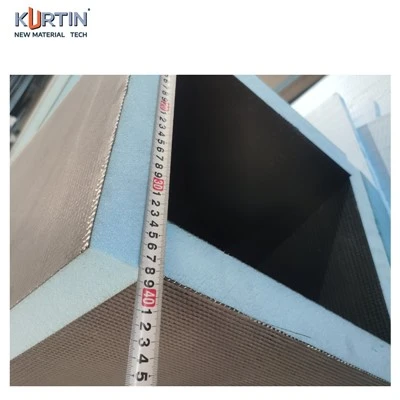
If you’re a builder, architect, or homeowner working on a new build and want to learn more about how PIR insulation can work for your project, get in touch to discuss your requirements and get a tailored quote. We’d be happy to help you every step of the way, from product selection to installation guidance.
Hydronic Radiant Floor Heating Systems References
- UK Government, Building Regulations Part L: Conservation of Fuel and Power, 2021
- Energy Saving Trust, Insulation for New Homes, 2023
- National Insulation Association, Thermal Conductivity of Rigid Foam Insulations, 2022
- Passivhaus Institute, Design Principles for High-Performance Residential Buildings, 2021
- Royal Institution of Chartered Surveyors, Life Cycle Costing for Building Materials, 2023
Zhejiang Kurtin New Material Tech Co., Ltd.
As one of the most experienced PIR insulation manufacturers and suppliers in China, we offer a wide range of products with superior quality. Please rest assured to wholesale bulk PIR insulation made in China here from our factory. We also accept customized orders.
Address: 8th Floor, Unit 1, Building 3, Zhi Di Mansion, Xiaoshan District, Hangzhou City, Zhejiang Province, P.R. CHINA
E-mail: Jeff.jin@kurtin.cn
WebSite: https://www.insulationpanel.net/
