If you’ve ever stared at an aircraft’s undercarriage or the messy tangle of wires behind a cockpit panel, you might’ve caught a tiny, unassuming metal piece holding it all together: that’s a bracket. As an aerospace components supplier, I see brackets every single day, and most people have no idea these little guys are unsung heroes of flight—they’re not just random metal bits, they’re precision-engineered lifelines that keep planes, helicopters, and even satellites flying safe. Let’s break this down like I would over a coffee with a new client, no stuffy engineering jargon (well, maybe a tiny bit, I’ll explain it). Aerospace Components
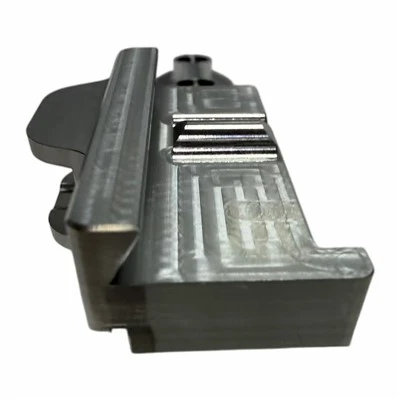
First off, let’s get real about what makes aerospace brackets different from the bracket you’d buy at a hardware store to hold up a kitchen shelf. That home depot bracket is made of cheap steel, might bend under the weight of a heavy pot, and doesn’t care if it’s exposed to rain or temperature swings. Aerospace brackets? They’re built for the wildest conditions you can imagine: temperatures that swing from -100°F at 35,000 feet to 1,800°F right next to a jet engine, constant vibration from takeoff and turbulence, and loads that hit harder than a linebacker running a 40-yard dash. Even the tiniest flaw—like a micro-crack no bigger than a grain of sand—can lead to catastrophic failure mid-flight. Yeah, I take this stuff seriously.
Brackets in aerospace do way more than just hold things level. Think of them as the middlemen between all the components that make an aircraft work. They attach everything: avionics racks to the fuselage, control cables to the ailerons, fuel lines to the wings, even tiny sensors that measure airspeed. On helicopters, they hold the rotor blades’ control mechanisms, which have to adjust 100 times a second to keep the craft stable. On satellites, brackets hold solar panels steady during launch (which shakes like a earthquake times 10) and then unfurl to hold them in place in space, where there’s no air to cushion movement. I worked on a satellite bracket project last year—we had to test it for 1,000 hours of vibration, freeze it to -200°F, then heat it back up, and make sure it didn’t so much as warp. If that bracket failed, the whole satellite’s power system would die, and we’d be out millions.
Now, what are they made of? Spoiler: it’s not regular steel. The most common materials are aerospace-grade aluminum, titanium, or specialty alloys like Inconel or Hastelloy. Aluminum is light, which is huge for aerospace—every pound saved cuts fuel costs, so we’re obsessed with weight. But it can’t handle super high heat, so we use titanium for parts near engines or exhaust systems, because it’s strong, light, and resists corrosion like a champ. Inconel is for the hottest spots—like the brackets that hold a jet’s afterburner components, which glow red hot during takeoff. We also use carbon fiber reinforced polymer (CFRP) for some non-structural brackets on newer commercial planes, because it’s even lighter than metal and doesn’t rust. As a supplier, I test every single batch of material we get—we do tensile strength tests, corrosion resistance checks, even x-rays to make sure there are no hidden flaws before we even touch the metal.
How are these brackets made? Most aren’t just cut out of a block of metal. We use precision CNC machining for the bulk of them—think of a robot that carves metal with a tool so sharp it can cut through titanium like butter, to tolerances tighter than a human hair. A typical bracket might have to fit into a space that’s only 0.001 inches of wiggle room—less than the width of a human red blood cell. For simpler brackets, we use stamping, like how you make a cookie cutter shape out of metal, but on a massive, precise scale. And for really complex parts, we use additive manufacturing (aka 3D printing) with metal powders—this lets us make brackets with internal cooling channels, which is perfect for high-heat engine parts. I’ll be honest, 3D printed brackets used to have a bad rap for being weak, but we’ve tested ours to hold 10x their rated load, and now most new aerospace programs use them. The catch? We still do a full fatigue test on every single custom bracket we make—we cycle it thousands of times, pulling and pushing it, to make sure it won’t snap after years of flight.
Wait, not all brackets are the same. There are structural brackets, which are part of the airframe and have to support heavy loads—like the ones holding the wings to the fuselage. Then there are non-structural brackets, which hold smaller parts, like a cup holder in the cockpit (yeah, those have brackets too) or a wiring harness. There’s also fluid brackets, designed specifically to hold fuel lines or hydraulic tubes, which have to be leak-proof to prevent fires. I even worked on a medical evacuation helicopter bracket that holds the patient’s monitor mount—had to make sure it wouldn’t wiggle even during a hard landing, because a loose monitor could hurt the crew or patient.
Common mistakes I see new aerospace engineers make when ordering brackets? Cheapening out on material. I once had a client who tried to use a standard steel bracket for a part near a jet engine—we tested it, and it melted at 1,200°F, which is way below the engine’s operating temperature. They had to re-do the whole part, costing them way more than if they’d just ordered the right titanium bracket in the first. Another mistake is not accounting for vibration—on commercial jets, parts vibrate constantly, so brackets have to have rounded edges to prevent stress cracks. Sharp corners? They’re a death sentence for aerospace brackets. We always stamp or machine radii into our brackets to spread out stress, which is a tiny detail that makes all the difference.
As an aerospace components supplier, I don’t just sell brackets—we offer full engineering support. A lot of our clients are small aerospace startups that don’t have a huge in-house team, so we help them design brackets that fit their specific needs, make sure they meet FAA (or EASA, for European craft) regulations, and deliver them on time. We know that if a bracket is late, it delays the whole aircraft build, so we keep our lead times tight—usually 2-4 weeks for standard brackets, 6-8 weeks for custom ones. We also do aftermarket brackets, so we supply replacement parts for older planes that are still flying, some that are decades old. Old aircraft can’t get new parts off the shelf, so we reverse-engineer the original bracket, test it, and produce it to meet modern standards. That’s work I’m proud of—keeping planes that have been flying for 30+ years safe.
Let’s talk about quality control, because that’s non-negotiable for me. Every single bracket we ship gets a full inspection. We use coordinate measuring machines (CMMs) to check dimensions down to the thousandth of an inch. We do non-destructive testing (NDT) like magnetic particle inspection, which finds tiny surface cracks that you can’t see with the naked eye. For critical brackets, we do destructive testing—we actually break a test bracket to make sure it meets its load rating. I had a client audit us last year, and they were shocked when we pulled out a bin full of broken test brackets, each labeled with which test they passed. For me, cutting corners on QC isn’t an option—my kid’s dad is a commercial pilot, and if a bracket fails, it’s not just a part that breaks, it’s people’s lives at stake.
A lot of people ask me if brackets are going to change as aerospace gets more advanced. The short answer is yes. With electric planes taking off, we need brackets that are lighter, work with high-voltage wiring, and can handle new battery technologies. For space tourism, brackets have to survive launch vibration and vacuum, and also be easy to replace if something goes wrong. We’re already working on brackets made from new composite materials that are even stronger and lighter than current CFRP, and we’re using AI to optimize bracket designs—running thousands of simulations to find the lightest, strongest shape possible for each part.

At the end of the day, brackets are the unsung backbone of every aerospace system. You won’t see them in movies about planes or satellites, but every takeoff, every cruise, every landing relies on hundreds of these little metal pieces doing their job perfectly. If you’re an aerospace engineer, a maintenance manager, or someone who needs custom or standard brackets for a plane, helicopter, or satellite, I’m here to help. We don’t do one-size-fits-all—we work with you to get exactly what you need, on time, and up to the strictest aerospace standards. Stop guessing if your bracket is right for your application—reach out, let’s chat, and I’ll make sure you’ve got the right part to keep your aircraft flying safe.
Aerospace Components REFERENCES
- FAA Advisory Circular 43.13-1B: Acceptable Methods, Techniques, and Practices – Aircraft Inspection and Repair
- Aerospace Materials and Processes Society (SAMPE) Handbook on Aerospace Fasteners and Components
- NASA Goddard Space Flight Center: Structural Components for Spacecraft and Launch Vehicles
Dongguan Yixin Metal Products Co., Ltd.
With abundant experience, we are one of the most professional aerospace components manufacturers and suppliers in China. Please rest assured to wholesale advanced aerospace components made in China here from our factory. Good service and quality products are available.
Address: No.172, Daxing Road, Yangwu, Zhen, Dongguan City, Guangdong Province, China
E-mail: Chengxingfeng123@163.com
WebSite: https://www.zgdgyixin.com/
