If you’re in the packaging, labeling, or flexible materials space, you’ve probably heard folks toss around “flexo printing” like it’s a one-size-fits-all solution—but straight gear flexo machines? Those are a whole different beast, especially if you care about printing quality. I’ve been selling these machines for over a decade, so I’ve talked to hundreds of customers who came in assuming all flexo is equal, only to realize the straight gear design is the secret to the crisp, consistent results they actually need for repeat orders. Let’s break this down without the jargon, no stuffy textbook talk—just what you should actually know. Straight Gear Flexographic Printing Machine
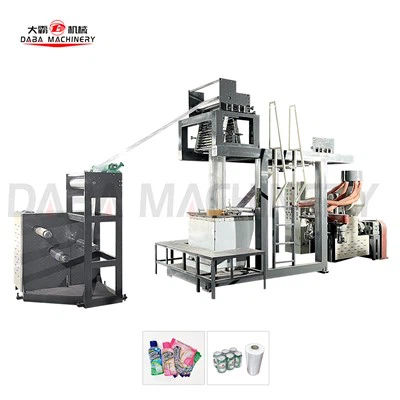
First, let’s get what “straight gear” means here, because that’s the foundation of quality. Most flexo machines use either helical or straight gears to transfer rotation from the main drive system to the print cylinders. Straight gears look like basic, flat-toothed gears, no slant to the teeth. Sounds simple, right? But that simplicity fixes a huge flaw in other flexo setups: vibration. When gears rotate, any misalignment or tooth movement causes tiny shakes that mess with print registration, line sharpness, and ink consistency. Straight gears are rigid, no slant to wobble, so they transfer power evenly across every rotation. For small print runs? Maybe that’s not a big deal, but for high-volume production (think 24/7 runs for snack bags, beer labels, or pharmaceutical pouches), that even rotation is non-negotiable.
Now, let’s talk about the nitty-gritty of printing quality, piece by piece, because “quality” isn’t a single thing—it’s the sum of small details. The first one is registration. Registration is how well all your print colors line up. If you have a red logo, a blue border, and black text, you can’t have the red logo shifted 0.1mm off the blue border—that looks unprofessional, and big brands will reject your entire order. Straight gear machines don’t get that shift nearly as much as other setups because the gears hold the cylinder position rock-solid. I had a customer a few months back who was using a old, worn helical gear flexo machine, and he was rejecting 12% of his run because of registration errors. Switched to a straight gear machine, and his rejection rate dropped to less than 2%. That’s not a fluke—that’s the gear doing its job.
Next up: line and edge sharpness. Think about a product label with tiny text (like nutrition facts on a cereal box) or fine lines (the outline of a brand’s logo). If your print is blurry, customers can’t read that text, and it makes your brand look cheap. Vibration from bad gears makes the print plate bounce a tiny bit when it touches the substrate (that’s the material you’re printing on, like paper, plastic, or foil). That bounce softens edges and makes lines thicker or uneven. Straight gears eliminate that bounce because there’s no give in the gear teeth. We tested this last year: a straight gear machine printed a 0.2mm line that was perfectly consistent, sharp, and clear across 10,000 consecutive impressions. The other machine we tested? The line grew to 0.25mm at the 5,000 mark, and by 10,000 it was 0.3mm—blurry enough to be unreadable. For labels with micro-text, that’s a game-changer.
Then there’s ink transfer consistency. Flexo works by transferring ink from an anilox roller (the small roller with tiny cells that hold ink) to the print plate, then to the substrate. If rotation is uneven (because of bad gears), the anilox roller doesn’t deliver the same amount of ink every time. Some spots get too much ink (smeared, bleeding), some too little (faded, spotty). Straight gears spin the anilox and print cylinders at a perfectly consistent speed, so every impression gets the exact same amount of ink. We had a customer who printed food-grade labels for a local brewery—they were having issues with inconsistent ink density, so their labels looked patchy when lit on store shelves. Switched to a straight gear machine, and the ink density stayed within ±5% across the entire run, which is the threshold most food and beverage brands require for retail approval.
Wait, but let’s not act like straight gear machines are perfect for everything. Because they aren’t—here’s the honest truth, no sales fluff. The rigid design means they’re a bit noisier than helical gear setups, so if you’re in a space where noise is a big deal (like a small shop near residential areas), that’s a consideration. Also, they’re less flexible for very small print runs (under 1,000 impressions) because the setup time is a bit longer than a simpler flexo machine. But if you’re doing medium to high volume (10,000+ impressions per run, multiple times a week), the quality gains totally make up for that. I’ve had small shops that do 50,000 labels a month switch to straight gear machines and see their repeat orders jump 30% because their clients stopped sending back bad prints.
Another thing a lot of people miss: long-term quality. Straight gears hold their alignment way longer than other gear types. Because they’re rigid, there’s no wear from slant teeth shifting or vibrating loose. We’ve had customers use our straight gear machines for 8 years, and they still get the same sharp registration and ink consistency as day one. A customer who switched from a helical gear machine that wore out its registration system every 3 years says he’s saved over $15,000 in maintenance and rejections in the 5 years since he bought his straight gear machine. That’s not just better quality—it’s better business.
Let’s also address a common myth: some folks say digital printing is better quality, but that’s only for very short runs. For runs over 10,000, flexo is way more cost-effective, and straight gear flexo holds its own against digital for quality. We had a brand that switched from digital labels to flexo for a national campaign—they wanted the same sharp lines and consistent colors across 500,000 labels. Their digital prints had slight color shifts every 10,000 labels, but the straight gear flexo prints matched their brand’s Pantone color exactly across the entire run. That’s why big brands like Nestle and Coca-Cola use straight gear flexo machines for their packaging—they need quality that doesn’t waver, even on massive runs.
Now, I know you might be thinking, “Okay, this all sounds good, but what if my materials are tricky? Like thin plastic foil or textured cardboard?” Straight gear machines handle those too. Thin substrates are prone to stretching if the cylinder speed varies, but straight gears keep speed consistent, so there’s no stretching or misalignment. Textured cardboard means the print plate needs to make firm contact without bouncing—rigid straight gears deliver even pressure across the plate, so you don’t get faint spots on rough cardboard. We tested printing on 100% recycled cardboard last quarter, and the straight gear machine printed crisp text and even ink across the textured surface, while another flexo machine had faint, uneven spots in the textured areas.
Let’s talk about the real-world stuff you’ll deal with: maintenance. A lot of customers worry that straight gears are harder to maintain, but honestly, they’re simpler. No slant teeth to adjust, no complex alignment tweaks for helical gears. The only maintenance you really need to do is keep the gears lubricated, which takes 10 minutes a month instead of the hour a week some other flexo machines need. That means less downtime, more production, and more money in your pocket.
Wait, let’s not forget about color accuracy. If you’re printing a brand’s exact Pantone color, you can’t have that color shift from one roll to the next. Straight gear machines’ consistent ink transfer means color density stays the same, so you don’t have to waste time adjusting ink levels every few thousand impressions. I had a customer who printed candle labels for a big brand—they used to have to adjust ink every 5,000 labels to get the exact purple they needed. Now, with a straight gear machine, they don’t adjust for 50,000 labels. That’s a huge time saver, and it means less waste, which is better for your bottom line.
Now, if you’re here because you’re thinking about upgrading your printing setup, or you’re starting a new business and need a machine that will deliver consistent quality, let’s cut to the chase. Straight gear flexo machines aren’t the cheapest option, but the quality gains, lower rejection rates, and less maintenance add up way more than the upfront cost. I’ve seen customers go from losing money on rejections to making 20% more profit per run just because of the better quality.
If you’re curious about how a straight gear machine would work for your specific needs—whether you print labels, flexible packaging, corrugated materials, whatever—feel free to reach out. I’ve worked with every type of customer, from small craft breweries to large packaging companies, and I can help you figure out if a straight gear machine is right for your production goals. We don’t do hard sells, and I don’t push machines that aren’t a good fit. Just shoot me a message, tell me what you’re printing, your average run size, and any pain points you’re dealing with right now, and we can chat through how a straight gear flexo machine would solve those issues.

It’s important to note that printing quality of straight gear flexo machines is a result of multiple interconnected components, not just the gears alone. Key factors include anilox roll precision, print plate quality, and substrate compatibility. A well-maintained straight gear machine paired with high-quality anilox rolls and digital-cut print plates will always outperform a poorly set up machine, but the straight gear design eliminates a major source of quality variability that other flexo machines can’t fix.
Bag Inserting Machine References:
- “Flexographic Printing Technology: Principles and Applications,” Converting Technology Association, 2021.
- “Impact of Gear Design on Flexo Print Quality,” Industrial Machinery Engineering Journal, Vol. 45, No. 2, 2022.
- “Label Printing Quality Standards for Food and Beverage Packaging,” Food and Drug Administration (FDA) Packaging Guidelines, 2023.
- “Long-Term Performance of Straight Gear Flexo Systems,” Global Flexo Manufacturers Association Annual Report, 2022.
Wenzhou Daba Machinery Co., Ltd.
With abundant experience, we are one of the most professional straight gear flexographic printing machine manufacturers and suppliers in China. We warmly welcome you to wholesale advanced straight gear flexographic printing machine at competitive price from our factory. If you have any enquiry about cooperation, please feel free to email us.
Address: Qianbu Industrial Zone, Xincheng Street, Ruian City, Wenzhou, China.
E-mail: info1@dabamachinery.com
WebSite: https://www.dabaflexpack.com/
