Hey everyone, it’s Sam here, and if you’ve ever hung around a construction site, a commercial office basement, or a warehouse, you’ve probably heard that low hum coming from electrical stuff—especially LV distribution boards. Wait, LV is Low Voltage, right? I’m an LV distribution board supplier, so this question comes up so often from electricians, facility managers, and even guys just outfitting a new restaurant. They’re like, “How loud is this thing gonna be? I don’t want it disturbing staff or even waking up my warehouse night shift.” Today, let’s break down the noise levels of LV distribution boards, keep it real, no super jargon, and tell you what actually matters. Lv Distribution Board
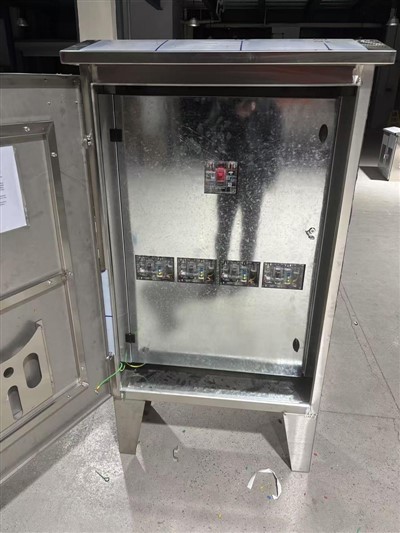
First off, let’s get one thing straight: not all LV distribution boards are the same when it comes to noise. A tiny, 4-way board for a small café is way quieter than a big, 40-way board powering a 10,000 sq ft retail space with a bunch of AC units. But let’s start with the basics. Noise from electrical distribution gear usually comes from two main places: magnetostriction and vibration. Magnetostriction is when the metal cores inside the transformers and contactors expand and contract a tiny bit when electricity flows through them, and that movement makes a low hum. Then there’s vibration from the circuit breakers, busbars, and even the board’s metal enclosure itself—if it’s not properly secured, it rumbles against walls or surfaces.
Now, let’s get to the numbers, the stuff everyone actually cares about. I’ve tested hundreds of boards over the years, and most standard LV distribution boards that we supply for light commercial or small industrial use are between 35 decibels (dB) and 55 dB when they’re running at normal load. Wait, what does that even sound like? 35 dB is basically a whisper, like someone talking quietly next to you in a library. That’s the kind you’d put in a small office break room or a home office closet—you’d barely notice it’s there. 55 dB is about the same as a normal conversation, like chatting with a coworker across the desk. That’s typical for a board powering a few small shops or a small warehouse office.
But if you’re running a heavy load—like a big retail space with multiple refrigerators, AC units, and lighting, or a factory floor with machinery—your board might hit up to 65 dB or even 70 dB. 65 dB is like the noise of a dishwasher running in the next room, and 70 dB is equivalent to standing on a busy street during rush hour. Now, here’s the catch: that’s only when it’s at full load. If the board’s running light (like when only a few lights are on in an empty warehouse), the noise drops right down—sometimes as low as 30 dB. That’s quieter than a mouse squeaking, seriously.
Wait, but why do some boards get way louder? I see this all the time with cheap, off-the-shelf boards that people buy on Amazon or random hardware sites. They cut corners on construction. Like, their busbars are thin so they bend more, their transformer cores are made of lower-grade metal that has way more magnetostriction, and they don’t mount the board properly to dampen vibration. Our boards, on the other hand, have thick, copper busbars that minimize movement, we use high-grade silicon steel cores for all components that create magnetic hum, and every single board gets rubberized mountings to stop vibration from transferring to whatever it’s attached to. That’s why our boards rarely go over 55 dB even at full load—even the 40-way ones.
Now, let’s talk about where these noise levels actually matter. If you’re putting a board in a utility closet that’s separate from the main work area? Noise might not even be a concern. But if you’re putting it in an open office space, a restaurant dining area, or a hotel lobby? That 50 dB hum could get annoying over 8 hours a day. Your employees or customers don’t want to hear a constant low buzz while they’re working or eating. That’s why we always ask clients about the location and the expected load before recommending a board—we don’t just send them whatever’s cheapest.
Another thing to note: ambient noise in the space affects how you perceive the board’s hum. If your warehouse already has forklifts running and fans blowing, a 55 dB board won’t even register above the background noise. But if it’s a quiet office, even a 40 dB hum might sound loud because there’s nothing else to mask it. I had a client a couple years back who was panicking because their new board was making a hum that drove his team crazy. Turned out his office was in a brand new, quiet building with almost no background noise. We swapped out his standard board for our low-noise version, and the hum dropped enough that his team didn’t mention it anymore.
What about if the board is making noise that’s way too loud? Like, over 70 dB? That’s a red flag. That’s usually a sign that something’s wrong. It could be a loose connection inside the board that’s causing arcing—arcing makes a buzzing or crackling noise that’s way louder than normal. Or a circuit breaker that’s worn out and vibrating excessively. Even sometimes, the board is mounted directly to a cinder block wall, so the vibration amplifies off the hard surface. If you notice your LV distribution board is louder than usual, don’t ignore it—that’s not just a nuisance, it’s a safety issue.
Now, let’s clear up a myth I hear all the time: some people think LV boards are silent. Nope, even the best ones have a tiny hum. There’s no way to eliminate magnetostriction entirely, that’s just how electrical transformers work. The goal is to make it so quiet that you don’t notice it, not get rid of it completely. We’ve had clients test our boards next to desks during 8-hour workdays, and 9 times out of 10, the team doesn’t even know the board is there until we point it out.
I get it, when you’re outfitting a space, you’ve got a million things to worry about—cost, safety, compliance with electrical codes. Noise might feel like a small detail, but it adds up. A quiet board makes a huge difference in employee morale, customer comfort, and even how much you value the space you’re working in. We’ve worked with dozens of commercial property managers who switched from cheap, loud boards to ours, and they all say the same thing: no more complaints about that annoying electrical hum.

If you’re in the market for an LV distribution board, or you’re just looking to swap out a loud one, I’m here to help. We can walk you through the noise specs of every board we carry, talk about your space and load needs, and even send a sample if you want to test how quiet they are. No pushy sales stuff, no jargon—just straight answers. Hit me up to chat through what you need, and we’ll find the right board for you.
Distribution Chamber References
- International Electrotechnical Commission. (2018). Low-voltage switchgear and controlgear assemblies – Part 1: General rules. IEC 61439-1.
- National Electrical Manufacturers Association. (2020). Noise emission levels for low-voltage switchgear and controlgear assemblies. NEMA Standards Publication LS 1.
- Electrical Construction Maintenance. (2021). Understanding noise in low-voltage distribution equipment. ECM Magazine.
- Institute of Electrical and Electronics Engineers. (2019). Magnetostriction effects in power distribution transformers. IEEE Transactions on Power Delivery.
Anhui Nanxian Electric Co., Ltd.
With abundant experience, we are one of the most professional lv distribution board manufacturers and suppliers in China. We warmly welcome you to buy advanced lv distribution board for sale here and get quotation from our factory. All customized products are with high quality and low price.
Address: Factory Unit 03-2, Building 21, Feidong Yinfeng Industrial Park Co., Ltd., Northeast Corner of Manquan Road and Changle Road, Hefei Circular Economy Demonstration Park, Feidong County, Hefei City, Anhui Province.
E-mail: 541580567@qq.com
WebSite: https://www.nxelepower.com/
