If you’ve ever stood in the shadow of a massive power plant—whether coal, natural gas, nuclear, or even a utility-scale wind farm—you might have watched turbines spin at speeds that make your head spin, wondering what keeps those critical, heavy components running smoothly. As a Babbitt bearings supplier with over a decade of working directly with power generation operators, plant engineers, and maintenance teams, I’m here to tell you that the quiet workhorse making that possible is often not the turbine blades or the generator itself: it’s Babbitt bearings. Babbitt Bearings
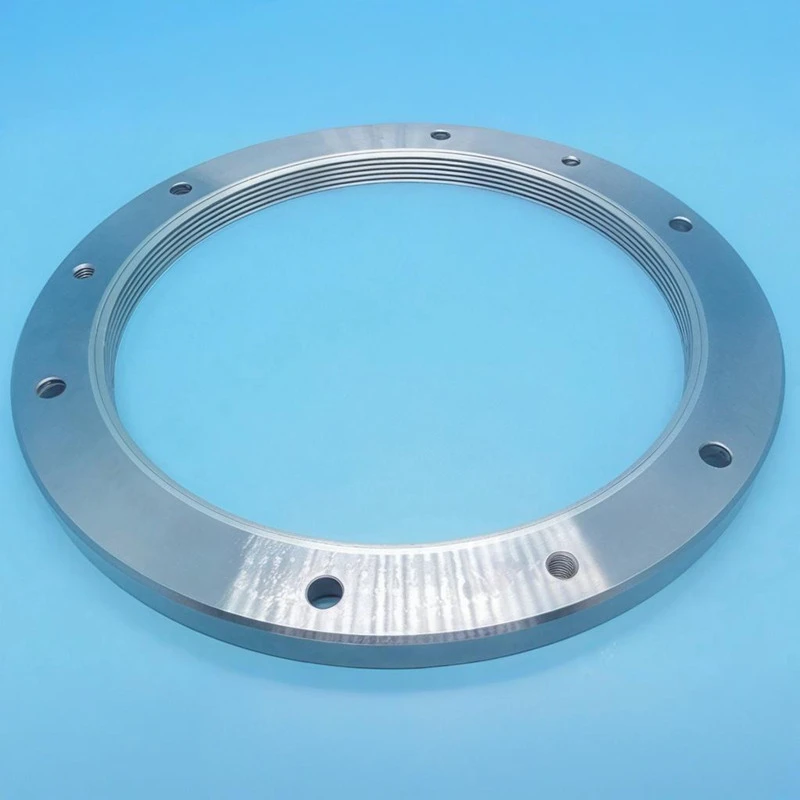
Let’s start with the basics, because if you’re new to power generation components, “Babbitt bearing” isn’t just a fancy term. Babbitt is a soft, tin- or lead-based alloy developed in the 1830s by Isaac Babbitt, and for power generation, it’s the lining material poured into steel bearing housings that cradle turbine shafts and generator rotors. At first glance, it might seem counterintuitive to use a soft metal as a critical part of equipment that can weigh thousands of tons and operate under enormous stress. But that softness is exactly what makes it irreplaceable in power generation applications.
Power generation has unique demands that most industrial applications don’t. Take a steam turbine in a coal-fired plant: steam at 1,000 degrees Fahrenheit pushes against turbine blades, spinning the rotor at 3,000 to 3,600 RPM (for standard grid frequency). The rotor can weigh 100 tons or more, so the bearing that supports it has to handle extreme static load, dynamic load from minor shaft misalignment, and constant rotational friction. Add to that the fact that the entire system runs 24/7 for months at a time, with only planned outages for maintenance. If a bearing fails, the whole plant goes offline—and a single day of downtime for a 500-megawatt power plant can cost hundreds of thousands of dollars in lost revenue and emergency repairs. That’s where Babbitt bearings come in, and their role is threefold: load distribution, friction reduction, and tolerance for operational disturbances.
First, load distribution. When a heavy rotor rests on a bearing, the contact area between the steel shaft and the steel housing would be tiny—just the microscopic high points of each surface. That would create massive localized stress, which would wear down the shaft or housing in hours. Babbitt’s softness lets it deform slightly under load to create a uniform, large contact surface across the bearing. The alloy’s composition is calibrated for power generation specifically: we supply tin-based Babbitt (the preferred choice for most modern plants, because it resists corrosion better than lead-based alternatives) with a hardness of around 20 to 30 Brinell—hard enough to hold its shape over months, soft enough to conform to shaft irregularities even as the shaft wears or shifts slightly. I recently worked with a maintenance team at a nuclear plant that had noticed a 0.002-inch misalignment in their high-pressure turbine rotor; their Babbitt bearings conformed to that shift perfectly, no extra machining needed, and they stayed in operation until their scheduled 18-month outage.
Second, friction reduction. The space between the Babbitt lining and the shaft is filled with turbine oil, pumped continuously through the bearing housing. Babbitt’s non-wetting properties mean that oil forms a thin, stable hydrodynamic film between the alloy and the steel shaft. That film is what separates the two metal surfaces entirely when the turbine is at operating speed—eliminating metal-on-metal contact, which is the leading cause of bearing failure. For a wind turbine, which operates at lower speeds (10 to 20 RPM for large rotors) but experiences dynamic loads from wind gusts and tower sway, Babbitt’s ability to maintain that oil film is even more critical. I’ve supplied Babbitt bearings to a wind farm operator in the Midwest that was having issues with roller bearings failing due to uneven load; switching to our custom-poured Babbitt main bearings cut their bearing failure rate by 75% in their first year of use.
Third, and most uniquely, Babbitt bearings have what’s called “embeddability” and “conformability”—two properties that are non-negotiable for power generation, where perfect conditions are rare. Embeddability means that small particles of debris (dust, rust, tiny metal shavings from routine wear) that accidentally get into the oil don’t scratch the shaft or the bearing. Instead, they get embedded into the soft Babbitt lining, so they don’t cause damage. Conformability means that if the shaft shifts slightly due to thermal expansion (steam turbines heat up 500 degrees Fahrenheit before reaching full speed) or minor misalignment, the Babbitt yields a little to adjust, rather than causing a hard contact that would seize the shaft. I remember a 2021 incident at a natural gas plant in Texas where a pressure spike in the lubrication system temporarily cut off oil flow to a generator bearing. The plant’s Babbitt bearing didn’t seize; it ran on the residual oil film for 12 minutes until maintenance could restore flow, preventing a catastrophic shutdown that would have cost an estimated $1.2 million. That’s the kind of reliability Babbitt delivers that other bearing materials—like bronze or ceramic—just can’t match.
Now, you might be wondering: with all the advances in bearing technology in the last 20 years, aren’t Babbitt bearings outdated? The short answer is no. In fact, demand for custom Babbitt bearings for power generation is growing, not shrinking, for two key reasons: first, retrofitting older plants (which make up 70% of global power generation capacity) with modern Babbitt bearings is far cheaper than replacing entire turbine systems. Second, new power generation facilities—especially flexible natural gas peaker plants that ramp up and down frequently to balance grid demand—are relying on Babbitt bearings for their ability to handle dynamic load changes. Flexible peaker plants have to go from idle to full power in 10 minutes, which means their bearings go from no load to full load in seconds; Babbitt’s ability to build a stable oil film quickly under changing conditions is a perfect match for that flexibility.
As a supplier, we don’t just pour standard Babbitt alloy and ship it out. Power generation applications are not one-size-fits-all. A wind turbine main bearing has different load and speed requirements than a generator bearing in a coal plant, which is different from the thrust bearing in a nuclear reactor coolant pump. We work directly with plant engineers to test their operating parameters: load, RPM, temperature, lubrication type, and even environmental factors like humidity (which affects oil contamination). For a hydroelectric plant in the Pacific Northwest, for example, we adjust the Babbitt alloy’s corrosion resistance to handle the moisture and sediment in turbine oil that’s common in hydropower operations. For a geothermal plant in Nevada, where temperatures can reach 500 degrees Fahrenheit, we offer a heat-treated tin-based Babbitt that maintains its hardness at high operating temperatures, preventing deformation over time.
Maintenance is another part of the role Babbitt plays that many people don’t talk about. Unlike roller or ball bearings, which are often discarded when worn, Babbitt bearings are repairable. When a plant comes down for a scheduled outage, maintenance teams can machine the worn Babbitt lining, pour new alloy, and re-machine the bearing to exact specifications—saving thousands of dollars compared to replacing a whole bearing housing. That repairability is a huge cost saver for power plants, which rely on long asset life (a turbine can operate for 30 to 40 years) and low long-term maintenance costs. I’ve worked with plants that have re-babbitted their main generator bearings three times in 20 years of operation, keeping their original steel housings and saving more than $200,000 each time compared to buying new bearings.
Of course, Babbitt bearings aren’t perfect. They require proper lubrication, regular oil analysis, and careful alignment—small mistakes can lead to wear or failure. That’s why we don’t just sell you a bearing and walk away. As a supplier, we provide on-site support for bearing installation, alignment checks, and maintenance training for plant teams. Last year, we sent a team to a plant in Ontario that was having premature bearing wear due to a misaligned lubrication pump; after adjusting the pump and training the maintenance team on proper Babbitt bearing monitoring, their bearing life extended from 18 months to 4 years. For power generation, that kind of partnership is what matters most—because a bearing is only as good as how it’s installed and cared for.
Looking ahead, the power generation industry is shifting toward more renewable energy: wind, solar, and even tidal. But even these new technologies rely on Babbitt bearings. Wind turbine gearbox bearings and generator bearings use Babbitt linings to handle the variable loads from wind gusts and the constant rotation needed to generate power. Tidal turbines, which operate in saltwater and are hard to access for maintenance, use Babbitt bearings that resist corrosion and can be repaired in place when needed. Even hydrogen-fueled power plants, which are emerging as a low-carbon solution for baseload power, are specifying Babbitt bearings for their high-speed turbomachinery, thanks to their ability to handle the high combustion temperatures and dynamic loads of hydrogen combustion.

I’ve spent my career in this industry, and the one thing I’ve learned is that the most critical parts of power generation are often the least visible. You can see the turbine blades and the smokestacks, but the Babbitt bearing that keeps the whole thing running smoothly is hidden inside the housing, doing its job 24/7. For plant operators, it’s not a component to take for granted. It’s a piece of equipment that directly impacts uptime, cost, and reliability. If you’re a power generation engineer, maintenance manager, or plant owner looking to upgrade bearings, improve reliability, or reduce downtime, we’re here to help. We work with all types of power facilities, from 50-megawatt peaker plants to 1,000-megawatt nuclear plants, to supply custom Babbitt bearings that fit your exact operational needs.
Babbitt Combination Bearings Whether you’re dealing with a worn bearing that’s causing unplanned shutdowns, planning a plant retrofit, or looking to optimize your new facility’s component selection, our team has the technical expertise and practical experience to support you. Don’t wait for a bearing failure to cost you thousands—reach out to our team to discuss your Babbitt bearing needs. We’ll walk through your operating parameters, provide custom alloy recommendations, and offer installation and maintenance support to ensure your bearings perform reliably for years to come.
References
- Stout, K. J. (2000). Fundamentals of Friction and Wear of Materials. ASME Press.
- Hamill, T. (2018). Steam Turbine Operations and Maintenance Handbook. Power Engineering Publications.
- Brandreth, J. (2020). Babbitt Bearings: Technology, Applications, and Best Practices for Power Generation. Journal of Turbomachinery, 142(5), 051003.
- International Energy Agency. (2022). Power Generation Equipment Reliability and Maintenance Report. IEA Publications.
- American Petroleum Institute. (2019). API 670: Vibration Monitoring Systems for Turbines, Generators, and Similar Machinery. API Publishing.
Wenzhou Zhengbang Bearing Co., Ltd.
We are one of the most professional babbitt bearings manufacturers and suppliers in China. With abundant experience, we warmly welcome you to buy customized babbitt bearings at competitive price from our factory. If you have any enquiry about free sample, please feel free to email us.
Address: Units 1-1 and 3-1, Building 12, Yongxing Nanyuan Small and Micro Enterprise Startup Park, Binhai 2nd Road, Yongxing Subdistrict, Longwan District, Wenzhou City, Zhejiang Province.
E-mail: zbbearing@zbbearing.com
WebSite: https://www.zb-bearings.com/
