If you’re in the market for a CNC milling machine, you’ve probably landed here wondering, “What’s the big deal about table size anyway?” As a CNC milling supplier that’s been helping small shops, fabrication teams, and even hobbyists find the right gear for over a decade, I get it—table size isn’t just some random spec to scroll past. It’s make-or-break for whether you can actually hold the parts you’re machining without jigs, or if you’ll be fighting space constraints mid-job and wasting time repositioning workpieces. Let’s cut the jargon and break this down like I’d chat with a customer who just walked through our showroom doors. CNC Milling Machine
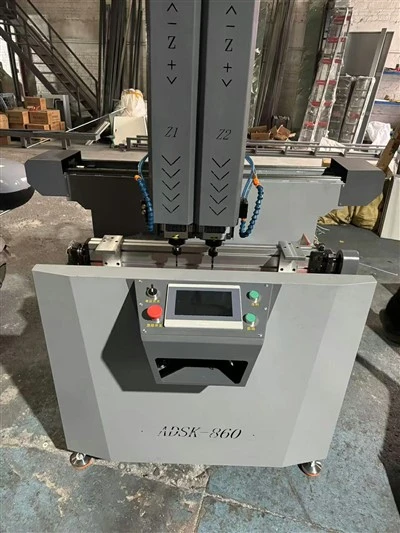
First, let’s get the basics straight: the table (sometimes called the worktable) is the flat, slotted metal platform where you bolt down your workpiece, vises, fixtures, or custom jigs. On most vertical CNC mills—our bread and butter, since they’re the most common for general machining—this table moves in two axes: X (left/right) and Y (forward/backward). The Z-axis is the spindle moving up/down, which is separate from the table. When people talk about “table size,” they’re almost always referring to the outer dimensions of that platform—length by width, measured in inches or millimeters depending on where you’re based. It’s not the “travel” (the amount the table moves in X/Y), but that travel is directly tied to table size, so they’re easy to mix up. A lot of first-time buyers mix these up, so that’s my first tip: don’t confuse the two. A table might be 12×36 inches, but that doesn’t mean your X travel is 36 inches—sometimes slots or mounting holes cut into the edges eat into a few inches, so the actual usable space is a touch less.
Now, why does table size matter for your work? Let’s run through a few real-world scenarios I’ve seen play out with customers. Last year, a customer came to us with a 10×18 inch aluminum bracket for agricultural equipment—he had a old manual mill with a 8×24 inch table, and he was constantly repositioning the bracket because he couldn’t clamp it all at once. The repositioning caused tiny alignment errors, and he lost 20% of his parts to scrap. We sold him a mill with a 12×36 inch table, and suddenly he could clamp the whole bracket in one setup, cut his scrap rate to under 3%, and finish jobs in half the time. Another customer is a hobbyist making custom wooden guitar necks—his old mini mill had a 4×8 inch table, so he had to build custom extensions just to fit a full neck. He upgraded to a small production mill with a 10×54 inch table, and now he can run 3 necks at once, no extensions needed. That’s the difference table size makes.
So, what are the standard table sizes you’ll see on CNC mills, and who each one is for? Let’s categorize them by use case to make it easy:
Mini Mills (Hobbyist / Small Job Shops): These are the entry-level machines, perfect for someone making prototypes, small parts, or tinkering. Their tables usually range from 4×8 inches (100x200mm) up to 9×42 inches (228x1067mm). I’ll be honest—if you’re only machining small parts like phone cases, small brackets, or jewelry molds, a 4×8 inch table works. But if you’re taking on small batch jobs, even 12×24 inches (305x610mm) is a way better sweet spot for someone just starting out. We see a lot of new customers skip the 4×8 inch mini mill because they outgrow it fast, and end up upgrading 6 months later—so it’s often a false economy.
Standard Vertical Mills (Mid-Sized Shops / Fabrication Teams): This is the workhorse for most small to medium production lines. Their tables range from 10×54 inches (254x1372mm) up to 14×60 inches (355x1524mm). These are the ones you’ll see in auto body shops making custom panels, wood shops cutting large cabinet parts, or job shops running batch work. A lot of our repeat customers stick with this size because it’s versatile: you can fit a single 4-foot long part, or 2-3 smaller parts at once, without feeling cramped.
Large Capacity Mills (Heavy Industry / Aerospace / Molds): If you’re machining heavy parts like engine blocks, large tool molds, or structural steel, you’ll be looking at tables 16×80 inches (406x2032mm) or bigger. These machines are bulkier, pricier, and built for hard, heavy cuts—think 3-axis milling for aerospace components that need to hold strict tolerances. We don’t sell a ton of these, but when a customer needs them, there’s no substitute for that table size.
Wait, but table size isn’t just length and width—there are hidden factors that matter just as much as the specs on the spec sheet. Let’s talk about those, because I’ve had customers get tripped up on these more than the numbers.
First, T-slot layout. Those grooves you see cut into the table? They’re for your bolts, vises, and fixtures, right? A 12×36 inch table with 3 T-slots spaced 4 inches apart is way more usable than one with 2 T-slots spaced 6 inches apart, especially if you’re clamping irregularly shaped parts. If your T-slots are too close to the edge, you won’t have room to mount a vise without hanging off the table. I always tell customers to count the T-slots and measure the distance between them before they buy—too many people overlook that and end up making custom jigs just to hold parts.
Then, table weight capacity. That’s how much weight the table can hold without warping or bending. A lot of cheap mini mills have a 50lb weight limit, which is fine for small aluminum parts, but if you’re machining a 100lb steel block, that’s a disaster. We rate all our mid-sized mills for up to 500lbs on the table, which is more than enough for most jobs. Heavy-duty mills can handle 2,000lbs+, but you don’t need that unless you’re working with seriously heavy materials.
Also, don’t forget the clearance around the table. I know, it’s not part of the table size, but if your mill is going in a 10×12 foot shop space, a 14×60 inch table needs 2-3 feet of clearance on all sides so you can load parts, change tools, and move the machine. I’ve had customers buy a huge mill, stuff it in a corner, and then realize they can’t get a forklift in to load large workpieces. It’s a tiny detail, but it kills productivity if you ignore it.
Now, let’s get to the question we get all the time: how do I pick the right table size for my needs? It’s not just about buying the biggest table you can afford. Let’s make a quick checklist you can use right now, no math required:
-
Measure your largest workpiece. Take the part you machine that’s the biggest, add 2 inches on each side for clamping space. If your largest part is 10×12 inches, you need a table that’s at least 14×16 inches total? Wait, no—wait, the clamping space is on the table, so if your workpiece is 10×12, you need the table to be big enough to fit that plus vise jaws or bolts around it. So a 12×24 inch table will work, because 10×12 fits with 2 inches on each side. That’s the baseline. If you want to run multiple parts at once, add the size of those parts too—if you run two 5×6 inch parts, you’ll need extra space between them, so bump up the table size a bit.
-
Match your workflow. If you’re a hobbyist making 1-off parts, a smaller table is fine. If you’re a job shop running 50-part batches, a mid-sized table saves you hours of setup time by letting you clamp multiple parts. If you’re making large molds or structural parts, you need that big table.
-
Test if possible. If you can, bring a sample of your workpieces to our showroom and set them on the tables we have on display. That’s the fastest way to tell if a table works for you—no spec sheet beats seeing and touching a part on the actual table.
Wait, let’s throw in a real example from our shop to make this concrete. Last quarter, we had a customer who builds custom marine parts—they were machining 8-inch long aluminum cleats and wanted to start doing larger, 24-inch long mounting brackets. They came in looking for a 12×24 inch mill, but when they laid a 24-inch bracket on our demo mill with a 10×54 inch table, they realized they could clamp two brackets side by side, and even a smaller cleat next to them. They ended up upgrading, and they told us later that they now run double the jobs in the same time, no extra work. That’s exactly why table size is so critical—it’s not just a spec, it’s a productivity booster.
Now, I know some of you are wondering: is there a downside to a bigger table? Yeah, absolutely. Bigger tables mean bigger, heavier machines, so they take up more space in your shop, they use more power, and they cost more upfront. If you’re a hobbyist only making small parts, a 12×24 inch table is overkill—you’re paying for space you’ll never use. We had a college student come in last year, looking for a mill to make robotics parts for his project. He almost bought a 14×60 inch mill, but when we helped him measure his parts, the largest was 4×6 inches, so a 8×32 inch mini mill was perfect, and saved him $2,000. That’s the balance—don’t go too big, but don’t go too small either.
Another thing to note: table size isn’t universal across all mill types. If you’re looking at a horizontal CNC mill (which is used for high-volume, heavy-duty milling, like making engine parts), tables are often larger, with more travel, since horizontal mills work on parts that are often longer and bulkier. But vertical mills still make up 90% of the market, so that’s what we focus on for most of our customers.
Let’s wrap this up with a quick recap, to make sure you don’t miss anything: table size is the outer dimensions of the worktable, not the X/Y travel, it dictates how big your workpieces can be, how many parts you can run at once, and how much setup time you waste. The right size depends on your workpieces, your workflow, and your shop space. Skip the tiny mini mill if you’ll outgrow it fast, don’t buy a massive mill if you only need small parts, and always check T-slots and weight capacity, not just the length and width.
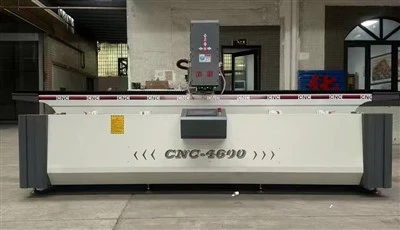
At the end of the day, we don’t just sell machines—we help you find the one that fits your needs. If you’re tired of fighting table size issues on your current mill, or you’re not sure what size works for the jobs you want to take on, we’re here to chat. Whether you’re a hobbyist working out of a garage, a small shop expanding, or a large operation looking to upgrade, we can walk you through the options, show you demo machines, and answer any questions you have about table size, specs, or anything else related to CNC milling. Don’t guess on your next mill—reach out, and let’s figure out what’s right for you.
Aluminum Profile Drilling Machine References:
- Modern Machine Shop. "CNC Milling Machine Specs: A Practical Guide for Buyers", 2022
- Haas Automation. "Worktable Sizing and Selection for Vertical Machining Centers", 2023
- SME (Society of Manufacturing Engineers). "Workholding and Table Design for CNC Machining", 2021
- Machining Data Handbook. "Worktable Capacity and Dimension Standards", 2020
Kanghong Building Materials Technology Sdn. Bhd.
As one of the most professional CNC milling machine manufacturers and suppliers in China, we have world-leading production equipment and strong manufacturing capabilities. Please feel free to wholesale advanced CNC milling machine for sale here from our factory. Customized orders are welcome.
Address: No.601, Block 2, Xinlianchang Industrial Park, No.2 Taixing Second Road, Taiping South Industrial Zone, Dali Town, Nanhai District, Foshan City
E-mail: 631871392@qq.com
WebSite: https://www.kanghong-building.com/
