If you’re in the market for stainless steel grating—whether it’s for a industrial plant walkway, a commercial deck, a drainage cover, or a loading dock—one question comes up again and again: “How much weight can this actually hold?” As a supplier who’s worked with fabricators, engineers, and facility managers for over a decade, I can tell you this isn’t a one-size-fits-all answer. It depends on a handful of specific factors, and skipping those details can lead to unsafe installations, wasted money, or even catastrophic failures. I’ve seen it happen, and I’ve helped clients course-correct when they overlooked small but critical variables. Let’s break this down like we’re chatting in the warehouse, not writing a textbook. Stainless Steel Grating
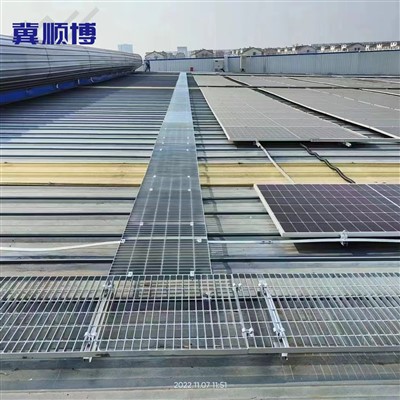
First, let’s get the basics straight: stainless steel grating’s load capacity isn’t a random number stamped on a sample. It’s calculated using engineering standards that most reputable suppliers follow, like ASTM A1011 (for structural steel) or the American Society of Civil Engineers (ASCE) 7-16, which sets minimum loads for pedestrian, light industrial, and heavy industrial use. The key here is that those standards aren’t arbitrary—they’re based on real-world use cases. For example, a pedestrian walkway in a mall doesn’t need to hold 80,000-pound semi-trucks, but a loading dock for a warehouse does. That’s why your first step isn’t picking a grating size—it’s defining exactly what the grating will support.
So what actually determines load capacity? Let’s start with the grating’s core material. Not all stainless steel is the same, and that changes strength entirely. We supply two main grades: 304 stainless and 316 stainless. 304 is the most common—it’s cheap, corrosion-resistant for indoor or mild outdoor use, and has a yield strength of about 30,000 psi (pounds per square inch). That’s the measure of how much stress it can handle before permanently bending. 316, on the other hand, has a yield strength of around 35,000 psi, and it’s far more resistant to salt, chemicals, or harsh weather—think coastal facilities or chemical plants. That extra strength means 316 grating can handle slightly higher loads than the same size in 304, but it’s important to note the difference is minor. The bigger factors are the grating’s design, bar size, and spacing.
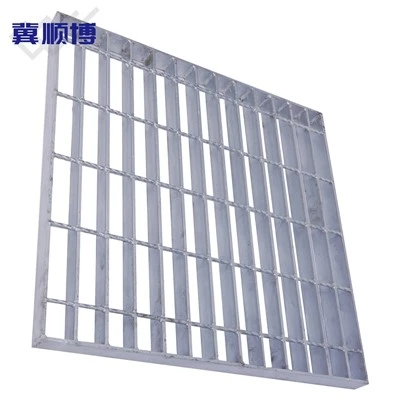
Speaking of design: there are two primary types of stainless steel grating, and each has its own load limits. We’re talking about welded bar grating (the most common for industrial and commercial use) and pressed bar grating (sometimes called swaged grating, lighter and for simpler applications). Welded bar grating is made from bearing bars (the long, load-carrying bars that run across the span of the grating) and cross bars (the smaller bars that tie bearing bars together). The number, thickness, and spacing of the bearing bars are where the magic happens. For example, a grating with 1-inch thick bearing bars will hold far more weight than one with 5/8-inch thick bars, all else equal. And closer spacing of bearing bars—say 2 inches apart instead of 4—distributes weight more evenly, so less pressure hits any single spot.
Then there’s span length. This is the distance between the two supports holding the grating up, whether that’s beams, concrete curbs, or metal frames. Span is probably the most overlooked factor by first-time buyers. If you install a 5-foot span grating instead of a 3-foot span of the same exact design, its load capacity drops drastically. I remember a client who ordered 10 pieces of 304 stainless grating for a loading dock, all in the same size he’d used for a 3-foot wide walkway. He installed them on 5-foot wide beams, and a week later, half the grating bent so bad a forklift’s tire got stuck. The problem wasn’t the material—it was the span. When span doubles, load capacity doesn’t halve; it can drop to a third or even a quarter, depending on the load formula. That’s why every project needs the right span-to-load ratio, not just matching a size from a past job.
Now, let’s talk about actual numbers, but keep in mind these are general guidelines, not guarantees. A common welded 304 stainless steel grating, with 1-inch thick bearing bars, 4-inch spacing, and a 3-foot span: that’s a light industrial application, so it can hold around 100 pounds per square foot (psf) for pedestrian use. If you go to a 5-foot span, that same grating drops to about 40 psf—still enough for foot traffic, but not for a pallet jack or a small vehicle. For a heavy industrial loading dock, we use 1-1/4-inch thick bearing bars, 2-inch spacing, and a span of up to 4 feet, which can handle 250 psf or more. That’s enough for a standard forklift carrying 5,000-pound pallets. If you need to support even heavier loads—like semi-truck ramps, heavy machinery bases, or storage tank platforms—we offer custom grating with thicker bearing bars, sometimes 2 inches, and reinforced support frames; those can handle over 500 psf, no problem.
Wait, but what about point loads? That’s another thing to remember. The psf number is for evenly distributed weight, like a crowd of people or a full pallet. Point loads are concentrated weight in one spot—think a forklift’s wheel, a jackhammer, or a piece of heavy equipment sitting on one corner. Manufacturers add a safety factor to point loads, usually around 1.5 times the distributed load, but that only works if the grating is designed for it. If you know you’re going to have point loads, you need to specify that upfront. We can engineer custom grating with extra cross bars or reinforced bearing bars to handle that, which is way better than having to replace a bent grating later.
Corrosion also plays a role, even in stainless steel. I know, stainless is supposed to be corrosion-resistant, but over time, exposure to salt water, acidic chemicals, or constant moisture can weaken the material—especially if it’s 304 in a coastal area. When that happens, the yield strength drops, which lowers load capacity. That’s why we always recommend 316 for harsh environments, not just for corrosion resistance but for keeping the strength consistent over time. I once worked with a seafood processing plant that used 304 grating for their floor drains; within two years, salt spray had pitted the bars, and the grating couldn’t support the heavy cleaning equipment they used. Swapping to 316 fixed that, and it’s held up for 8 years now.
Now, let’s talk about common mistakes I see buyers make. First, going for the cheapest grating to save money. A 5/8-inch thick bar is cheaper than 1-inch, but if you need to hold a forklift, that 5/8-inch will bend, and replacing it costs far more upfront. Second, ignoring span length. I can’t stress this enough: if your supports are 5 feet apart, don’t buy grating rated for a 3-foot span. Third, not disclosing the exact use case. If you tell me “it’s for a walkway vs. a loading dock,” I can steer you straight; if you just say “give me the strongest grating,” I might overengineer it, which adds unnecessary cost.
What about testing? Most reputable suppliers will have load test data for their grating. We test every custom order and standard line item in our in-house testing lab, where we apply measured loads until the grating reaches its design limit, to make sure it meets ASCE and ASTM standards. We don’t just rely on spec sheets—we verify it. That’s why our customers trust us: they know the numbers are backed by real testing, not just calculations.
So, when you’re out shopping for stainless steel grating, don’t just ask “what’s the load capacity?” Ask the right questions: What’s the span between your supports? Is the load evenly distributed or concentrated (point load)? What environment is the grating in (indoor, coastal, chemical)? And always work with a supplier who can walk you through those answers, not just send you a price list.
If you’re planning a project, whether it’s a new industrial walkway, a drainage system, a loading dock, or something in between, don’t guess at the load capacity. Reach out to our team to discuss your exact needs. We’ll help you select the right grating grade, bar size, spacing, and design to meet your load requirements, stay within your budget, and ensure the installation is safe and long-lasting.
Fiberglass Grating References
American Society of Civil Engineers. ASCE 7-16 Minimum Design Loads and Associated Criteria for Buildings and Other Structures. American Society of Civil Engineers, 2016.
ASTM International. Standard Specification for Steel Grating, Welded and Press-Locked. ASTM A1011/A1011M-21, 2021.
Miller, J. Stainless Steel Grating: Structural Performance and Applications. Industrial Steel Fabrication Journal, vol. 14, no. 3, 2019, pp. 45-52.
Hebei Shunbo Metal Wire Mesh Manufacturing Co., Ltd.
As one of the most professional stainless steel grating manufacturers and suppliers in China, we’re featured by quality products and good price. Please rest assured to buy high-grade stainless steel grating for sale here from our factory. Contact us for more details.
Address: No.66, Xicheng Avenue, West Zone, Economic Development Zone, Raoyang County, Hengshui City, Hebei Province, China
E-mail: info@steelgratingworld.com
WebSite: https://www.shunbosteelgrating.com/
