Hey there, if you’ve ever dug into how your phone’s circuit board gets built, or why a industrial sensor works when you tap its casing, you’ve probably run into two big words in electronics parts talk: discrete and integrated. I’m a rep here at an electronic info equipment components supplier, and I get it—if you’re a designer, a tech purchasing lead, or even just a hobbyist swapping out parts, mixing these two up can lead to headaches (like a project blowing up because you grabbed the wrong part). Let’s break this down straight, no stuffy textbook jargon. Electronic Information Equipment Components
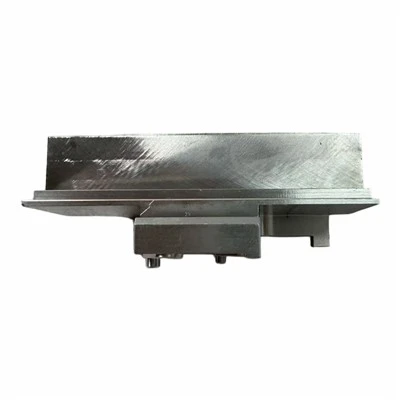
First, let’s get the basic definitions out of the way, because that’s where most people go wrong when they lump them together. Discrete components are, well, individual, standalone parts that do one single job. Think of resistors (those little colored bands that limit current), capacitors (store a tiny bit of charge), diodes (let electricity flow only one way), and transistors (switch or amplify signals). Each of these is a separate part you solder onto a circuit board, one by one. Integrated components—aka ICs, like microchips, microcontrollers, or logic gates—are tiny, miniaturized circuits that cram hundreds, thousands, even millions of those discrete parts onto a single silicon chip. One IC might have 100 transistors, 50 resistors, and 20 capacitors all doing a dozen different jobs, all packed into something smaller than your fingernail. That’s the core difference, right? But there’s way more to it than just “one part vs. a bunch of parts.”
Let’s talk about how they’re built, because that affects everything from size to cost to reliability. Discrete parts are made on their own production lines. A resistor, for example, is made by depositing a resistive material on a ceramic base, cutting it to size, and adding metal leads for soldering. Each one is tested individually before it ever gets to a supply chain. ICs? They’re made using photolithography, the same tech that prints super tiny patterns on silicon wafers. You can’t take a single transistor out of an IC and use it alone—they’re all etched and wired together as a unit. That’s why you don’t see someone selling a “single transistor from an Intel microchip” on our supplier’s catalog; it’s all or nothing for the IC.
Now, let’s get into the practical stuff you actually care about if you’re buying parts. Let’s start with size. Discrete parts are big, relatively speaking. A standard through-hole resistor is about the size of a grain of rice, and even tiny surface-mount resistors (SMDs) are barely smaller than a poppy seed. If you’re building a compact device—like a smartwatch, a wireless earbud, or a medical monitor that needs to fit on a small wrist—discrete parts alone would take up way too much space. ICs solve that problem: a single microcontroller can do the work of dozens of discrete transistors, resistors, and logic gates, all in one tiny package. That’s why modern gadgets are so small and sleek—we’re using ICs to shrink the circuit boards.
Then there’s cost. Wait, it’s not as simple as “ICs are always cheaper” or “discrete parts are always cheaper.” Let’s break that down. If you only need one resistor for a project? Grabbing a single discrete resistor from a supplier is cheap—like, a few cents, or even less if you buy in bulk. If you need to build a whole circuit, though, using dozens of discrete parts can add up, and you have to solder each one by hand or pick-and-place machine, which adds labor time. ICs, on the other hand, have a higher upfront cost per unit, but if you’re building a large batch of products, the cost per IC drops a lot because they’re mass-produced. Plus, installing one IC takes way less time than installing 50 discrete parts. For example, if we’re supplying parts for a company making 10,000 wireless speakers: using ICs cuts the number of parts on each circuit board from 80 discrete components to 5 ICs, so labor cost goes down, and total parts cost ends up being lower than buying 80 individual parts. But if you’re building a custom small circuit that only needs a few components? Discrete parts are the way to go—no need to buy a whole IC just for one or two jobs.
Reliability is another big one, especially for industrial or aerospace gear where failure is not an option. Discrete parts are individual, so if one breaks, you can swap it out without replacing the whole circuit. But they also have more points where something can go wrong: every time you solder a discrete part, that’s a possible weak spot, and each individual part has its own failure rate. ICs? They have way fewer solder points, so fewer places for failure, but if the whole IC breaks, you have to replace it instead of fixing one tiny part. Wait, but there’s a twist here: when you cram parts together on an IC, the distance between components is super short, which means signals move faster and are less prone to noise (unwanted electrical interference that can mess up a device). Discrete parts have longer wires between them, so signal loss is higher, and they’re more susceptible to picking up noise from other parts. That’s why ICs are the go-to for high-speed devices, like 5G routers or gaming laptops—their signals are cleaner and faster.
Let’s also talk about use cases, because that’s how you’ll actually choose which one to use. Discrete components are your workhorses for simple, custom, or low-volume projects. If you’re building a prototype, a custom sensor, or a small circuit that just needs to regulate voltage or switch power, discrete parts are perfect. They’re easy to source, easy to test, and you can tweak the circuit by swapping a resistor or a capacitor without reworking a whole IC. For example, if a customer comes to our supplier asking for parts to build a custom temperature sensor for a farm irrigation system, we’ll recommend discrete components for the voltage regulation and the sensor’s signal path—since it’s a low-volume, one-off or small-batch project, and they need to adjust settings easily. On the flip side, ICs are for mass-produced devices, high-speed electronics, and complex systems. Every smartphone, TV, or laptop you’ve ever owned is packed with ICs: the main processor, memory chips, power management ICs, all that stuff. You can’t build a modern smartphone with just discrete parts—it would be the size of a suitcase, way too expensive, and way too slow. Even small consumer gadgets like Bluetooth earbuds use ICs for audio processing and power management.
Wait, but there’s a middle ground I should mention, because a lot of people don’t know this. Some components are hybrid—they have small, integrated circuits mixed with discrete parts. For example, a power amplifier for a car stereo: it might have an IC that handles signal processing, then discrete transistors that handle the heavy power needed to drive the speakers. That way, you get the small size and efficiency of the IC for the signal, plus the power handling of discrete parts where the IC isn’t good enough. We actually supply a lot of these hybrid setups for automotive clients, because car electronics need both reliability and power.
Now, let’s talk about common mistakes people make when choosing between discrete and integrated parts. The biggest one is overcomplicating with ICs when you don’t need them. I’ve had clients come to us saying they need a microcontroller for a simple LED blinking circuit, when they could just use a couple of discrete transistors and resistors that cost a fraction of the IC. On the flip side, I’ve seen people try to use discrete parts for a high-speed project, and their device ends up lagging or failing because the signals are too noisy. That’s why it’s important to match the part to the job, not the other way around.
Another thing to keep in mind as a procurement person: lead times. Discrete parts are often in stock at suppliers like us, because they’re made in large quantities for so many different products. ICs, especially specialized ones, can have long lead times—sometimes weeks or even months, if there’s a supply shortage. That was a big issue a few years back when the chip shortage hit, and a lot of companies had to switch to discrete parts temporarily because they couldn’t get the ICs they needed. It’s good to have both options in your pipeline, right?
Now, I know I mentioned I’m from an electronic info equipment components supplier, so let’s tie this back to what that means for you. We carry both discrete and integrated parts, and our team is used to helping clients figure out which is right for their project. If you’re designing a new device, whether it’s a prototype or a full production run, we can walk you through the pros and cons, help you source parts with short lead times, and make sure you’re not overspending on parts you don’t need.
Wait, let’s wrap this up with a quick recap to make it easy. Discrete parts: individual, single-function, good for simple, low-volume projects, easy to customize, lower upfront cost for small quantities, bigger size, more solder points. Integrated parts: miniaturized multi-function circuits, good for mass production, small size, faster signals, lower total cost for large batches, higher upfront cost per unit, single point of failure if it breaks.
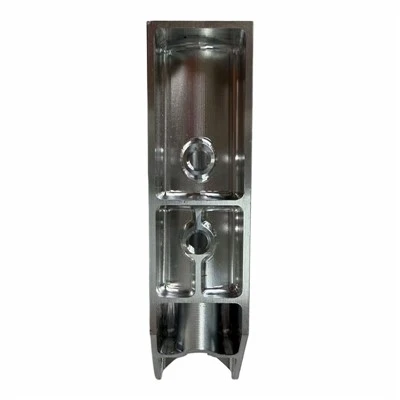
If you’re still not sure which type of parts you need, or you’re shopping around for a reliable electronic information equipment components supplier, feel free to get in touch with our team to chat through your project details. We’re here to help you source the right parts at the right price, no confusing jargon, no hidden fees.
Aerospace Components References
- Electronic Industries Alliance. "Discrete vs Integrated Components: Basics and Applications." EIA Standards Handbook, 2021.
- Semiconductor Industry Association. "Global IC Production and Discrete Component Supply Dynamics." SIA Annual Report, 2022.
- Nilsson, J.W. & Riedel, S.A. "Electric Circuits and Electronics." Pearson, 2019.
- Texas Instruments. "Understanding Discrete and Integrated Component Tradeoffs for Design Engineers." TI Application Note, 2020.
Dongguan Yixin Metal Products Co., Ltd.
With abundant experience, we are one of the most professional electronic information equipment components manufacturers and suppliers in China. Please rest assured to wholesale advanced electronic information equipment components made in China here from our factory. Good service and quality products are available.
Address: No.172, Daxing Road, Yangwu, Zhen, Dongguan City, Guangdong Province, China
E-mail: Chengxingfeng123@163.com
WebSite: https://www.zgdgyixin.com/
