As a hybrid cable supplier, I get asked this question at least three times a week, and honestly? It makes sense. When a customer comes to me saying “I need a hybrid cable,” they’re not just looking for a wire that carries power and data—they’re looking for a product that works reliably in their specific environment, doesn’t fail when they need it most, and doesn’t blow their budget. Over the past 12 years I’ve been in this business, I’ve seen too many buyers cut corners on what actually defines a quality hybrid cable, only to end up with downtime that costs them way more than the extra few bucks they saved. Today I want to break down the real, actionable standards we use at my company to build the hybrid cables we stand behind—standards that aren’t just industry jargon, but things you can actually test and verify when you’re evaluating your next supplier. Hybrid Cable

First, let’s get the basics straight: a hybrid cable is, by definition, a single cable assembly that combines two or more distinct functional elements. Most commonly, that’s power conductors for carrying electrical current, and data conductors for transmitting signals—whether that’s low-speed control signals for a factory robot, high-speed Ethernet for a medical imaging machine, or even fiber optic strands for long-distance, high-bandwidth communication. But that’s just the starting point. The standards that separate a good hybrid cable from a disposable one start with the core design, and that’s where most unvetted suppliers skip steps.
The first non-negotiable standard I prioritize is conductor sizing and insulation compliance, split between power and data circuits. For power conductors, this isn’t just about picking a wire that fits the voltage. It’s about adhering to cross-sectional area standards that account for both the continuous current load and the environment the cable will live in. For example, if a cable is going to be used in a mobile application—think a construction site crane or an AGV (automated guided vehicle) in a warehouse—the power conductors need to be sized to handle thermal buildup from constant flexing, not just steady-state use. That means following standards like IEC 60228 for conductor resistance, or NEC (National Electrical Code) for US-based projects, to ensure the cable won’t overheat, melt insulation, or cause a fire. Too many cut-rate suppliers will use thinner, cheaper power conductors that technically meet the label’s gauge rating, but have more impurities in the copper, leading to higher resistance, more heat, and a much shorter lifespan.
For data circuits, the standard is even more specific, because data integrity is non-negotiable. If your hybrid cable carries data for a robotic arm, a bad connection can cause the arm to misalign, leading to broken parts or safety hazards. For copper data circuits, that means adhering to standards like TIA-568 for Ethernet, or IEC 61156 for industrial data cables, which specify twist rates per pair, insulation dielectric material, and crosstalk limits. For fiber optic data circuits—another common add-on to hybrid cables—standards like IEC 60793 for fiber performance, or TIA-455 for cable assembly testing, dictate that the fiber must have low attenuation (signal loss) and be protected from bending, crushing, or moisture. I’ve seen a supplier cut corners here by using fiber that’s rated for 1000m of signal transmission, but installing it wrong so the actual run loses 50% of the signal before it even reaches its destination—simply because they didn’t test fiber tension during assembly.
Next, the biggest differentiator for hybrid cables is the jacket and overall mechanical construction, and this is where application-specific standards really come into play. A hybrid cable that works for a desk phone in an office is not the same as one that works for an outdoor security camera, a deep-sea ROV, or a construction vehicle. The jacket has to meet environmental standards tailored to the use case. For example, if the cable is going to be used outdoors or in a harsh industrial environment with oils, chemicals, or UV exposure, it needs to meet standards like UL 62 for oil resistance, or IEC 60811 for UV and weather resistance. For cables that need to flex hundreds of thousands of times—like in a robot arm or an AGV—the jacket has to be a flex-rated material, usually a thermoplastic elastomer (TPE) or polyurethane (PUR), and adhere to standards like ISO 6722 for automotive flex cables or IEC 60227 for flexible power cables. We test all our flex hybrid cables to 1 million bending cycles before we even consider shipping them to a customer—something many small suppliers skip, which leads to cables cracking and failing within months of installation.
Cable geometry is another part of construction that’s often overlooked. A hybrid cable isn’t just two separate wires jammed into one jacket. If the power conductors are too close to the data conductors, or if the conductors are not spaced evenly along the length of the cable, you get electromagnetic interference (EMI), which corrupts data. For data circuits, EMI is a death sentence—imagine a medical MRI machine that gets a bad data signal mid-scan, ruining a scan and risking patient safety. The standard here is shielding design, which is part of the overall electrical performance standard for hybrid cables. Most high-performance hybrid cables use a combination of shielding: foil shielding for high-frequency data, and braided shielding for lower frequencies, plus a drain wire to ground the shield properly. The standards here are IEC 61557 for shielding effectiveness, which tests how well the block EMI from external sources like motors or power lines. I’ve had customers come to me with hybrid cables from other suppliers that had less than 30% shielding effectiveness, because the braid was too thin and had gaps between strands—we always aim for 95% or higher, per industry best practices that go hand-in-hand with formal standards.
Then there’s the testing and certification part, which is non-negotiable for any hybrid cable that needs to be used in commercial, industrial, or medical applications. No hybrid cable is complete without third-party testing and certification, because that’s the only way to prove it meets the standards you’re claiming. The most common certifications our customers ask for are UL, CE, CSA, and RoHS. UL certification means the cable has been tested for safety: overcurrent, insulation resistance, fire resistance, and mechanical strength. CE certification is mandatory for products sold in Europe, and means it meets EU health, safety, and environmental standards. RoHS certification ensures the cable doesn’t have hazardous materials like lead, mercury, or cadmium—critical for industries like aerospace or medical devices where material restrictions are strict.
But certification alone isn’t enough. We also do in-house rigorous testing for every batch of hybrid cables we make, because third-party testing only samples a small percentage of a supplier’s production. Our in-house tests include continuity testing for every power and data circuit, attenuation testing for fiber circuits, shielding effectiveness testing, and flex cycle testing for all moving applications. Last year, we had a customer send us a sample of a hybrid cable they’d been using from another supplier—when we tested it, we found that 12% of the power conductors had higher resistance than the rated limit, which would have led to overheating and failure within 6 months. That’s the kind of problem you catch when you don’t cut corners on testing.
Another often-overlooked standard is customization for the end-use case. A lot of suppliers will push a one-size-fits-all hybrid cable, but that’s a mistake. For example, a hybrid cable for an underwater ROV needs to be pressure-resistant, buoyant, and resistant to saltwater corrosion—standards like API 17J for offshore cables apply here, which specify the cable’s performance at depths of up to 10,000 feet. A hybrid cable for a medical device, like a surgical robot, needs to be biocompatible if it comes into contact with tissue, adhering to ISO 10993 for biocompatibility. A hybrid cable for an AGV in a cold storage warehouse needs to be flexible at temperatures as low as -40°C, which means its insulation and jacket material must meet IEC 60068 for low-temperature performance. I always tell customers that the best hybrid cable isn’t the one that meets a generic standard—it’s the one that meets the specific standard for their exact application. That’s why we spend time talking through every detail: how much power they need, what data speed they require, how much the cable will flex, what environment it will be in, and what certifications they need for their industry.
I also want to talk about something that’s not a formal standard, but is a critical part of delivering a quality hybrid cable: traceability and supply chain transparency. A few years back, a customer told me they had a hybrid cable fail on a new machine they were installing in a car factory, and when they tracked down the supplier, the supplier couldn’t tell them where the copper for the power conductors came from. The cable had been made with recycled copper that had too many impurities, leading to the overheating that caused the failure, which shut down the factory’s assembly line for 12 hours. At our company, every batch of hybrid cables has a serial number, and we can trace every component—copper, insulation, shielding, fiber—back to its original supplier. We keep test records for every batch, so if a customer has a question, we can pull up exactly how that batch was tested, who tested it, and what results it got. That level of transparency isn’t a standard you’ll find in a manual, but it’s how we ensure our products live up to the standards we set for ourselves.
Now, I know that for a lot of people reading this, it can feel like a lot of technical jargon—and that’s on purpose. The hybrid cable market is flooded with cheap, untested products that look the same on the outside, but will fail when you need them most. When you’re evaluating a hybrid cable supplier, ask for three things: their certification documentation, their in-house testing procedures, and their ability to customize the cable for your specific use case. Don’t just go for the lowest price—we’ve had customers come to us after paying 20% less for a hybrid cable that failed within 3 months, costing them thousands in downtime and repairs.
As a hybrid cable supplier, our job isn’t just to sell you a cable—it’s to make sure that cable works for your application, reliably, for as long as you need it. We’ve built our business on these standards, and over the years, we’ve partnered with companies across industries: from medical device manufacturers building surgical robots to construction companies using cranes with integrated data sensors, from AGV fleets in warehouses to offshore companies installing ROVs for undersea exploration. Every project is different, so every hybrid cable we build is tailored to meet the exact standards that project requires.
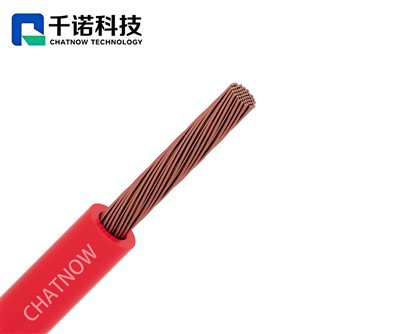
If you’re in the market for a hybrid cable, whether you need a standard off-the-shelf product or a custom assembly for a unique application, we’re here to help. We can walk you through the standards that apply to your project, provide testing documentation, and build a cable that meets and exceeds your requirements. Don’t settle for a hybrid cable that doesn’t meet the real standards—reach out today to talk through your needs, and let’s build a cable that works for you.
Hybrid Copper Fiber Cable References
IEC 60227: Insulated flexible cables for rated voltages up to 450/750 V
IEC 60793: Optical fibres – Part 1: Measurement methods and specifications
NEC Article 310: Conductors for general wiring
TIA-568.2-D: Commercial Building Telecommunications Cabling Standard
UL 62: Standard for Rubber-Insulated Wires and Cables
ISO 10993: Biological evaluation of medical devices
API 17J: Specification for subsea umbilicals, risers, and flowlines
Zhejiang Chatnow New Material Technology Co., Ltd.
Zhejiang Chatnow New Material Technology Co., Ltd. is well-known as one of the leading hybrid cable manufacturers and suppliers in China, specialized in providing high quality customized service. Please feel free to wholesale high-grade hybrid cable at competitive price from our factory.
Address: Building 12, No.9 Huajin Road, ZhouWangMiao Town Innovation Center, Haining, Zhejiang 314400
E-mail: info@chatnow-cable.com
WebSite: https://www.chatnow-cable.com/
