If you’ve ever walked into a kitchen showroom or scrolled through a home renovation Instagram feed, you’ve almost certainly seen engineered quartz countertops. They’re the workhorse of modern design: seamless, low-maintenance, and available in dozens of looks from solid matte blacks to marble-inspired veining that fools even seasoned designers. But over the 12 years I’ve been supplying engineered quartz to contractors, kitchen designers, and DIY homeowners across the U.S., the question I get asked most isn’t about their aesthetic or cost—it’s a simple one that still sparks debate: “Does engineered quartz crack easily?” Engineered Quartz

I get it. For most people, countertops are a long-term investment. You’re not just picking a surface to set a toaster on; you’re choosing something that will survive dropped pots, spilled wine, heavy cutting boards, and a thousand small accidents over 10, 15, even 20 years. So the idea of a countertop cracking under normal use is scary. The good news is that “engineered quartz cracking” isn’t a yes-or-no question. It’s about context, quality, and how the material is made, handled, and installed. As a supplier who’s stood behind my products through hundreds of service calls, I can break this down like I break down every question I get from clients: with hard data, real-world examples, and a little truth about what this material can (and can’t) handle.
First, let’s get clear on what engineered quartz actually is, because that’s foundational to understanding how it holds up. Unlike natural stone like granite or marble, which is cut straight from the earth, engineered quartz is a man-made composite. It starts with around 90% crushed quartz— the same mineral you’d find in a pebble on a beach—blended with 10% or less of polymer resins, pigments, and binders. The mix is poured into large molds, compressed under intense pressure (we’re talking thousands of pounds per square inch), and cured at high temperatures to harden into solid slabs. That process is non-negotiable for quality: the best slabs on the market aren’t just pressed and left to dry; they’re put through a second curing step to make sure every resin is fully set, no tiny gaps or air pockets are left in the material, and the quartz particles are bonded evenly.
Here’s the first key point about cracking: engineered quartz is far denser and more rigid than natural stone. Natural granite, for example, has small inherent flaws—micro-cracks or voids from the geologic formation process—that make it more prone to splitting if hit with a hard object or cut poorly during installation. Engineered quartz, by contrast, is engineered to be consistent. The cured resin fills in almost every gap between quartz particles, so there are no random weak spots from nature. That’s why independent testing from the Natural Stone Institute shows that high-quality engineered quartz has a flexural strength (the ability to bend without breaking) that’s 20-30% higher than most mid-grade granite. For context, that means a countertop that’s installed correctly won’t crack if you drop a 10-pound cast iron skillet on it. I’ve seen this play out first-hand: last year, a contractor client called me panicking because a homeowner dropped a Dutch oven onto their new quartz island at 7 a.m. The quartz had a tiny chip on the edge, but no crack. The homeowner just laughed and said it was way sturdier than their old laminate countertop, which would have split right down the middle.
But before you go thinking quartz is indestructible, let’s talk about when it does crack—because that’s almost never a flaw in the material itself, it’s a flaw in how it’s used, installed, or cared for. The most common cause of quartz cracking isn’t a dropped pot; it’s improper support. Engineered quartz is rigid, but it’s not unbreakable. If you have an overhang on your island or a countertop that stretches more than 10 feet without a seam, that overhang needs extra support. We always recommend installing corbels, brackets, or a solid base underneath any overhang longer than 12 inches, because quartz doesn’t flex. If you put 50 pounds of bar stools on a 24-inch overhang with no support, the center of that overhang will sag slightly over time, and eventually, it will crack along the seam or right in the middle. I’ve seen this mistake way too many times: a homeowner wants a sleek, overhanging breakfast bar, ignores our installation guidelines, and calls me three months later with a crack. That’s not a bad quartz product—that’s bad installation and bad expectation-setting.
Another common culprit is thermal shock. I know what you’re thinking: quartz is heat resistant, right? The manufacturers say you can set hot pans on it. And that’s true—for small, moderate heat. Most high-quality engineered quartz slabs have a heat resistance rating of around 300 degrees Fahrenheit. That means a warm baking pan (around 200 degrees) is fine, a hot pot right out of the oven (around 400 degrees) is not. If you set a 425-degree Dutch oven on quartz with no trivet or hot pad, the sudden temperature change can cause a micro-crack to form, which can spread over time. I once had a designer client who put her roast pan straight on the quartz counter after taking it out of a 450-degree oven. The quartz looked fine for two weeks, then she noticed a thin, hairline crack running from where the pan had sat. We fixed it with a standard resin fill, but that’s a classic thermal shock case—something that could have been avoided with a $5 silicone trivet. People often mix up quartz with other surfaces, like laminate, that warp under heat, but even quartz has limits.
Lower-quality engineered quartz is a whole different story, though, and that’s where a lot of the confusion comes in. Not all quartz is made the same. I’ve had clients come to me after buying cheap quartz from a big-box store, only to have it crack a year later. Why? Because those slabs often cut corners on the manufacturing process. Some producers use less quartz and more resin to cut costs, or press the material at lower pressure, leaving tiny air pockets and weak bonds between particles. That means the flexural strength is way lower than it should be. I tested a batch of cheap quartz a few years ago that had a flexural strength of less than half of our standard product—so a dropped mug would leave a crack. So when people ask me “does engineered quartz crack easily?” the first thing I ask is “what grade is it?” If you buy a slab that’s 90% quartz, pressed at 10,000 PSI, cured twice, from a reputable supplier, it won’t crack under normal use. If you buy a slab that’s 60% quartz, with a lot of filler resin, pressed at low pressure, it’s going to be much more fragile. I’ve seen that first-hand too: a homeowner bought a countertop from a discount store, and after six months, a crack formed along the sink cutout. The sink cutout is a weak point for any stone, but the cheap quartz couldn’t handle the stress of the cut, so it cracked.
Wait, what about the sink cutout? That’s another common area for cracks, and it’s not quartz being weak—it’s how it’s cut and sealed. When you cut a hole for a sink, the edges of the cut need to be polished and sealed properly. If a contractor cuts the hole roughly, or leaves sharp edges that have tiny micro-cracks in them, that’s a starting point for a crack. Even a small amount of stress from tightening sink clips too tight can cause that micro-crack to spread. That’s why we work exclusively with contractors who are certified in quartz installation—we don’t just sell slabs; we provide training on how to cut, seal, and support quartz correctly, because even the best material will fail if it’s installed wrong.
Let’s also address a myth I hear all the time: that quartz cracks if you use it as a cutting board. Wait, no— that’s not a quartz problem, that’s a general countertop problem. Any hard surface, whether it’s quartz, granite, or laminate, will dull knife blades if you cut directly on it. It can also cause tiny chips or scratches, which are different from cracks. I always tell my clients: use a cutting board, not your countertop, for knives. That’s just good kitchen practice, not a specific quartz rule. Scratches can be buffed out of quartz easily, by the way—we do that at our warehouse all the time for showroom slabs, so it’s not a big deal. Cracks are a different issue, but they’re almost always avoidable.
So putting this all together, the short answer is: high-quality engineered quartz doesn’t crack easily. It’s engineered to be stronger than most natural stones, durable enough for daily kitchen use, and resistant to the kind of impacts and spills that would damage other surfaces. But it’s not unbreakable. It will crack if it’s improperly supported, if it’s exposed to extreme heat, if it’s cut or installed poorly, or if it’s low-quality material made with cheap manufacturing practices.
Here’s what I tell every client when they’re choosing quartz: do your research. Ask for the flexural strength rating of the slab (we always provide that for our products—no secrets). Ask about the manufacturing process. Ask about installation guidelines. Most importantly, work with a supplier who stands behind their product. I’ve been in this business long enough to know that a countertop is only as good as the company that sells it. If you buy quartz from someone who doesn’t answer your calls when you have a crack, or doesn’t provide installation training, you’re setting yourself up for frustration.
At the end of the day, I supply engineered quartz because I believe it’s the best material for most homeowners. It looks great, it’s low maintenance, and it’s way more durable than people give it credit for— when it’s made and installed right. But I also don’t sugarcoat it: it’s not invincible. If you drop a 20-pound weight on it with no support, or set a hot pizza stone directly on it, you might have a problem. If you follow the rules, though, it will last for decades.
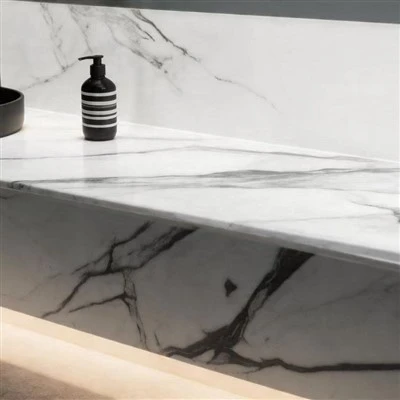
If you’re planning a renovation and have more questions about engineered quartz, whether it’s about cracking, care, or which slab works best for your space, feel free to reach out. We work with contractors, designers, and homeowners to make sure they get the right product, the right installation, and the support to keep their quartz looking great for years.
Quartz Countertop References
Natural Stone Institute. (2022). Performance Characteristics of Engineered Stone Surfaces. Natural Stone Institute Technical Bulletin.
Consumer Reports. (2021). Countertop Guide: What to Choose for Your Kitchen. Consumer Reports Home Improvement.
Quartz Surfacing Manufacturers Association. (2023). Best Practices for Engineered Quartz Installation and Care. QSMA Industry Guidelines.
Wuhu Junde New Material Technology Co., Ltd.
As one of the most experienced engineered quartz manufacturers and suppliers in China since 1998, we warmly welcome you to wholesale top-quality engineered quartz made in China here from our factory. If you have any enquiry about cooperation, please feel free to email us.
Address: No.8 Yulin Road, Xinwu Economic Development Zone, Anhui Province, China
E-mail: 1127319898@qq.com
WebSite: https://www.jundequartz.com/
