Hey there! I’m a supplier of drilling hoses and rotary hoses. One of the most common questions I get from customers is how to select the right hose based on pressure rating. It’s a crucial decision because if you get it wrong, you could end up with a hose that doesn’t perform as expected or, even worse, fails catastrophically. So, let’s dive into the details and learn how to make the right choice. Drilling Hose/ Rotary Hose

Understanding Pressure Ratings
First things first, what exactly is a pressure rating? Well, the pressure rating of a hose refers to the maximum amount of pressure it can safely handle. It’s usually measured in pounds per square inch (psi) or megapascals (MPa). This rating is determined through a series of tests that simulate real-world conditions, including factors like internal pressure, temperature, and impulse cycles.
You’ve got two main types of pressure ratings to worry about: working pressure and burst pressure. Working pressure is the maximum continuous pressure that the hose is designed to handle during normal operation. It’s like the speed limit on a highway; as long as you stay within it, you’re safe. Burst pressure, on the other hand, is the pressure at which the hose will fail completely. It’s kind of like hitting the wall at full speed; you definitely don’t want to do that.
Why Pressure Rating Matters
The pressure rating of your hose is super important for a few reasons. First off, it ensures safety. If you use a hose with a pressure rating that’s too low for your application, it can burst, causing serious injury to your workers and damage to your equipment. It’s like wearing a seatbelt in your car; it’s there to protect you from harm.
Secondly, using the right pressure-rated hose improves performance. A hose that’s rated correctly for your pressure requirements will deliver a consistent flow of fluid, whether it’s mud, water, or oil. This means your drilling operations will run smoothly and efficiently, saving you time and money in the long run.
Factors to Consider When Selecting a Hose Based on Pressure Rating
Application Pressure
The most obvious factor to consider is the pressure that your application will generate. You need to know the maximum pressure that your system will reach during normal operation. This can usually be found in the equipment specifications or by consulting with the equipment manufacturer. Make sure to account for any spikes in pressure that might occur during startup, shutdown, or other transient events.
Safety Margin
It’s always a good idea to add a safety margin to your pressure requirements. This gives you some leeway in case there are any unforeseen fluctuations in pressure. A common safety margin is around 25% to 50% above the maximum working pressure. So, if your application has a maximum working pressure of 2,000 psi, you might want to look for a hose with a working pressure rating of 2,500 to 3,000 psi.
Temperature
Temperature can have a big impact on the pressure rating of a hose. As the temperature increases, the material properties of the hose can change, reducing its ability to withstand pressure. Make sure to select a hose that’s rated for the maximum temperature that it will be exposed to in your application. Most hoses have temperature ratings listed in their specifications, so be sure to check this before making a purchase.
Hose Construction
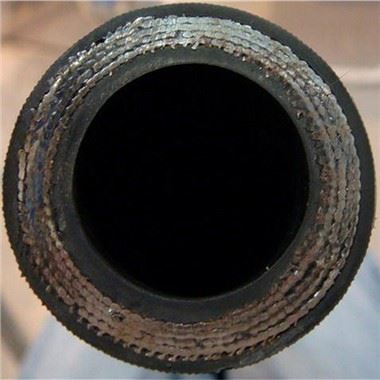
The construction of the hose also plays a role in its pressure rating. Hoses are typically made up of an inner tube, a reinforcement layer, and an outer cover. The inner tube is responsible for containing the fluid, while the reinforcement layer provides strength and support. The outer cover protects the hose from external damage.
There are different types of reinforcement layers, including braided, spiral, and wire-braided. Braided hoses are generally more flexible but have a lower pressure rating compared to spiral or wire-braided hoses. Spiral and wire-braided hoses are stronger and can handle higher pressures, but they’re also less flexible.
Fluid Compatibility
You need to make sure that the hose you choose is compatible with the fluid that it will be carrying. Different fluids can have different chemical properties, and some fluids can react with the materials used in the hose, causing degradation or failure. Check the hose manufacturer’s specifications to ensure that the hose is compatible with the fluid you’ll be using.
How to Read Hose Pressure Ratings
Reading hose pressure ratings can be a bit confusing at first, but it’s actually pretty straightforward once you know what to look for. The pressure rating is usually listed on the hose itself, along with other important information like the size, length, and temperature rating.
The working pressure is typically listed as a single number, followed by the unit of measurement (psi or MPa). For example, a hose with a working pressure rating of 3,000 psi will be labeled as "3,000 psi WP." The burst pressure is usually listed as a multiple of the working pressure. For example, a hose with a working pressure of 3,000 psi and a burst pressure of 12,000 psi might be labeled as "3,000 psi WP / 12,000 psi BP."
Common Mistakes to Avoid
One of the most common mistakes people make when selecting a hose based on pressure rating is underestimating the pressure requirements. This can happen if you don’t take into account all the factors that can affect the pressure, such as transient events or temperature changes. Always do your research and make sure you have a clear understanding of the maximum pressure that your application will generate.
Another mistake is ignoring the safety margin. As I mentioned earlier, adding a safety margin to your pressure requirements is crucial for ensuring the safety and performance of your hose. Don’t skimp on this important step.
Finally, make sure you choose a hose from a reputable manufacturer. There are a lot of cheap, low-quality hoses on the market that may not meet the required pressure ratings or other specifications. Stick with well-known brands that have a proven track record of delivering high-quality products.
Conclusion
Selecting the right drilling hose or rotary hose based on pressure rating is a critical decision that can have a big impact on the safety and performance of your drilling operations. By understanding the factors that affect pressure rating, such as application pressure, safety margin, temperature, hose construction, and fluid compatibility, you can make an informed decision and choose a hose that will meet your needs.
If you’re still not sure which hose is right for your application, don’t hesitate to reach out. As a supplier, I’ve got the knowledge and experience to help you select the perfect hose for your specific requirements. We can discuss your needs in more detail and find the best solution for you.
Remember, choosing the right hose is an investment in the safety and efficiency of your operations. So, take the time to do it right and make sure you’re getting a hose that will perform under pressure.
Silicone Hose References
- Wilson, J. D. (2008). Principles of Engineering Hydraulics. McGraw – Hill.
- Fluid Sealing Association. (2015). Hose Selection Guide.
- Industrial Hose & Fittings Handbook. (2019). Parker Hannifin Corporation.
Hebei Qianli Rubber Products Co., Ltd.
As one of the most professional drilling hose/ rotary hose manufacturers and suppliers in China, we have world-leading production equipment and strong manufacturing capabilities. Please feel free to buy bulk durable drilling hose/ rotary hose made in China here from our factory.
Address: West industrial Zone, Jing County, Hengshui City, Hebei Province, China.
E-mail: manager@hebeiqianli.com
WebSite: https://www.qianlirubber.com/
