Hey there! I’m a supplier of PP Hollow Sheet Extrusion Lines, and today I wanna chat about the automation level of these awesome machines. PP Hollow Sheet Extrusion Line
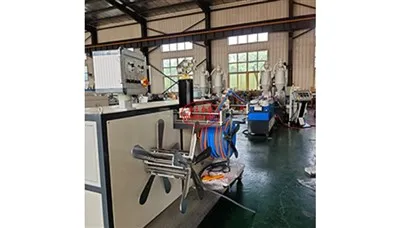
First off, let’s understand what a PP Hollow Sheet Extrusion Line is all about. It’s a piece of equipment used to produce polypropylene (PP) hollow sheets. These sheets are super versatile, used in packaging, construction, advertising, and a whole bunch of other industries. Now, the automation level of this line can vary quite a bit, and it’s a crucial factor that can make or break a business.
Basic Automation Features
At the most basic level, modern PP Hollow Sheet Extrusion Lines come with some standard automation features. Take the feeding system, for example. In the old days, workers had to manually add the raw materials into the extruder. But now, most lines are equipped with an automatic feeding system. This system can accurately measure and convey the right amount of PP resin, additives, and recycled materials into the extruder. It’s a game – changer because it not only saves time but also reduces the risk of human error. You don’t have to worry about someone accidentally putting in too much or too little of a certain material, which could mess up the quality of the final product.
Another common automation feature is temperature control. The extrusion process is highly sensitive to temperature. If the temperature is too high, the PP material can degrade, and if it’s too low, the sheets won’t form properly. Thanks to automation, the temperature sensors and controllers can continuously monitor and adjust the temperature in different zones of the extruder and the cooling system. They work in real – time, making sure that the processing temperature stays within the optimal range for producing high – quality hollow sheets.
The speed control of the extruder and the haul – off system is also automated. By precisely controlling the speed, we can ensure a consistent thickness and width of the PP hollow sheets. For instance, if you want to produce thinner sheets, the automation system can increase the speed of the haul – off system while keeping the extrusion rate in balance. This way, you get uniform sheets every time.
Intermediate Automation Level
Moving up to the intermediate automation level, we start seeing more advanced features. One of these is the closed – loop control system. In a closed – loop control system, the sensors continuously collect data about various parameters such as pressure, temperature, and speed. This data is then sent to a central control unit, which analyzes it and makes adjustments to the process variables as needed. For example, if the pressure in the extruder suddenly drops, the control unit can automatically increase the speed of the extrusion screw to maintain the right pressure.
Quality control is another area where intermediate – level automation shines. There are inline inspection systems installed on the extrusion line. These systems use cameras and sensors to detect defects in the PP hollow sheets as they are being produced. If a defect like a hole, a crack, or an uneven surface is detected, the system can either mark the defective area or even cut out the defective section automatically. This helps in reducing waste and ensuring that only high – quality sheets make it to the market.
Also, the intermediate automation level often includes an automatic shear and stacking system. Once the PP hollow sheets are extruded, the shear can cut them to the desired length with high precision. Then, the stacking system can neatly stack the sheets in a pile, ready for packaging and shipping. This reduces the need for manual labor in the post – production process, which is not only more efficient but also safer.
High – End Automation
When we talk about high – end automation in PP Hollow Sheet Extrusion Lines, we’re entering a whole new realm. These lines are basically like smart factories on their own. They are integrated with a Management Information System (MIS). This system can collect all the production data, such as production volume, energy consumption, and quality control results. It can then generate detailed reports, which the management can use to analyze the production process, identify bottlenecks, and make informed decisions about production planning and resource allocation.
Another cool feature at the high – end is the remote monitoring and control capability. With the help of the Internet of Things (IoT) technology, the operators can monitor the entire extrusion line from anywhere in the world using a smartphone or a computer. They can check the real – time status of the equipment, receive alerts if there are any problems, and even make adjustments to the process parameters remotely. This is especially useful for large – scale production facilities with multiple extrusion lines, as it allows for centralized management and better response to emergencies.
Robotic systems are also often integrated into high – end extrusion lines. These robots can perform tasks such as loading and unloading the raw materials, handling the finished products, and even performing some maintenance tasks. They work with high precision and repeatability, which further improves the overall efficiency and productivity of the production process.
Why Automation Matters
You might be wondering, why all this automation stuff? Well, there are several reasons. First and foremost, automation significantly improves productivity. With less manual intervention, the production speed can be increased, and the production line can run 24/7 with minimal downtime. This means more output in less time, which is great for meeting high – volume orders.
Secondly, automation enhances product quality. The precise control of process parameters and the real – time quality inspection ensure that the PP hollow sheets produced are of consistent high quality. This helps in building a good reputation in the market and increasing customer satisfaction.
Cost – reduction is another major benefit. Although the initial investment in an automated extrusion line is higher, in the long run, it saves money. You need fewer workers, which reduces labor costs. Moreover, the reduction in waste and the more efficient use of energy translate into lower production costs.
Choosing the Right Automation Level
When it comes to choosing the right automation level for a PP Hollow Sheet Extrusion Line, there are a few things to consider. If you’re a small – scale producer with limited orders, a basic automation level might be sufficient. It can still improve the efficiency and quality of your production compared to a completely manual operation, without breaking the bank.
On the other hand, if you’re a large – scale producer aiming to be competitive in the global market, investing in a high – end automated line could be a smart move. It can provide you with the edge you need in terms of productivity, quality, and cost – effectiveness.
Let’s Get in Touch
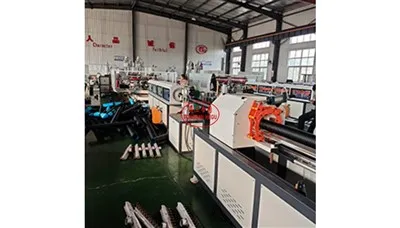
So, there you have it, a rundown of the automation levels of a PP Hollow Sheet Extrusion Line. Whether you’re just starting out in the business or looking to upgrade your existing equipment, I’m here to help. I’ve got a wide range of extrusion lines with different automation levels to meet your specific needs.
WPC Door Machine If you’re interested in learning more about our products or want to discuss a potential purchase, don’t hesitate to reach out. Let’s start a conversation and see how we can work together to take your production to the next level.
References
- "Plastic Extrusion Technology" by Allan A. Griff.
- Industry reports on polypropylene hollow sheet production and automation trends.
Qingdao Tongsanhegu Plastic Machinery Manufacturing Co., Ltd.
With abundant experience, we are one of the most reliable pp hollow sheet extrusion line manufacturers and suppliers in China. We warmly welcome you to buy durable pp hollow sheet extrusion line for sale here from our factory. Quality products and reasonable price are available.
Address: West of Xixinzhi Village, Sanlihe District Jiaozhou, Qingdao City, Shandong Province, China
E-mail: info@tongsanhegu.com
WebSite: https://www.tongsanhegumachine.com/
