Yo, what’s up! I’m a supplier of wave springs, and today I wanna chat about the frequency response of these cool little things. Wave springs are pretty nifty components used in all sorts of applications, from automotive to electronics, and understanding their frequency response is super important. Wave Spring
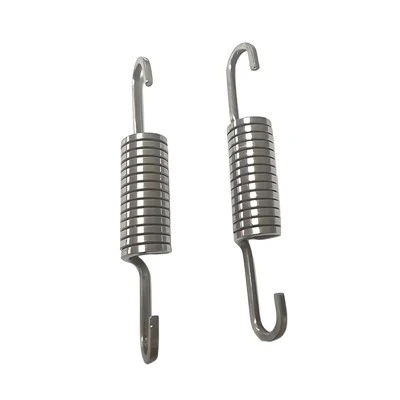
So, first off, let’s talk about what frequency response actually means. In simple terms, it’s how a wave spring reacts to different frequencies of input. You know, when you apply a force or a vibration at a certain frequency, the spring will respond in a particular way. This response can tell us a lot about how the spring will perform in real – world situations.
The frequency response of a wave spring is affected by a bunch of factors. One of the main ones is the material it’s made of. Different materials have different elastic properties, which means they’ll respond differently to frequencies. For example, a spring made of stainless steel might have a different frequency response compared to one made of music wire. Stainless steel is more corrosion – resistant and has a certain stiffness, while music wire is known for its high strength and flexibility.
Another factor is the geometry of the wave spring. The number of waves, the height of the waves, and the pitch between them all play a role in determining the frequency response. If you have a spring with more waves, it might be more flexible and have a different resonance frequency compared to a spring with fewer waves. The height of the waves also affects how the spring compresses and expands, which in turn impacts its response to different frequencies.
Let’s dig a bit deeper into resonance. Resonance is a key concept when it comes to the frequency response of wave springs. Resonance occurs when the frequency of the input matches the natural frequency of the spring. When this happens, the spring can vibrate with a much larger amplitude, and it can even lead to some serious problems if not properly managed. For instance, in an automotive engine, if a wave spring resonates at a certain engine speed, it could cause excessive wear and tear, or even lead to component failure.
To measure the frequency response of a wave spring, we usually use some fancy equipment. One common method is to use a vibration testing machine. We attach the spring to the machine and apply vibrations at different frequencies. Then, we measure the displacement and the force of the spring’s response. This data can be plotted on a graph, which shows us how the spring behaves at different frequencies.
Now, why is all this important for us as wave spring suppliers? Well, our customers rely on us to provide springs that will perform well in their applications. If we understand the frequency response of our wave springs, we can better match the right spring to the right application. For example, if a customer is using a wave spring in a high – speed rotating machine, we need to make sure the spring’s frequency response is suitable for that environment. We don’t want the spring to resonate at the operating speed of the machine, or it could cause all sorts of issues.
We also need to be able to communicate this information to our customers. When they come to us with a specific application, we can explain how the frequency response of our wave springs will affect their performance. This helps build trust and ensures that our customers are getting the best product for their needs.
In addition to providing the right springs, we can also offer some advice on how to optimize the frequency response of the wave springs in their applications. For example, we might suggest adding some damping materials to reduce the amplitude of resonance. Or, we could recommend adjusting the pre – load of the spring to change its natural frequency.
As a wave spring supplier, we’re constantly working on improving our products. We’re always looking at new materials and manufacturing techniques to enhance the frequency response of our springs. For example, we might experiment with different heat – treatment processes to change the material properties of the spring and make it more resistant to resonance.
We also keep an eye on the latest research in the field of spring technology. There are always new studies coming out that give us more insights into how wave springs behave at different frequencies. By staying up – to – date with this research, we can offer our customers the most advanced and reliable wave springs on the market.
If you’re in the market for wave springs, and you’re concerned about the frequency response, don’t hesitate to reach out to us. We’ve got the expertise and the experience to help you find the perfect spring for your application. Whether you’re working on a small electronic device or a large industrial machine, we can provide you with the right wave spring that will perform well under the specific frequency conditions of your project.
We can have a detailed discussion about your requirements, and we’ll walk you through the process of selecting the best wave spring. We’ll explain how the frequency response of different springs will impact your application, and we’ll work with you to make sure you’re getting the most out of our products.
So, if you’re interested in learning more or starting a procurement process, just drop us a line. We’re here to help you make the right choice and ensure the success of your project.
Torsion Spring References:
- "Mechanical Springs Handbook"
- Research papers on spring dynamics and frequency response in relevant engineering journals
Shengzhou Deyuxiang Hardware Accessories Co., Ltd.
We are one of the most professional wave spring manufacturers and suppliers in China, also support customized service. With abundant experience, we warmly welcome you to buy high quality wave spring made in China here and get pricelist from our factory. For price consultation, contact us.
Address: No. 38, Caosheng Road, Caoqiao Street, Pinghu City, Jiaxing City, Zhejiang Province
E-mail: 877286126@qq.com
WebSite: https://www.dyx-spring.com/
