Hey there! I’m a supplier of specialized wastewater treatment equipment. Over the years, I’ve seen a lot of folks get interested in our gear, but they’re often not sure about the training requirements for operating it. So, I thought I’d break it down for you in this blog. Specialized Wastewater Treatment Equipment
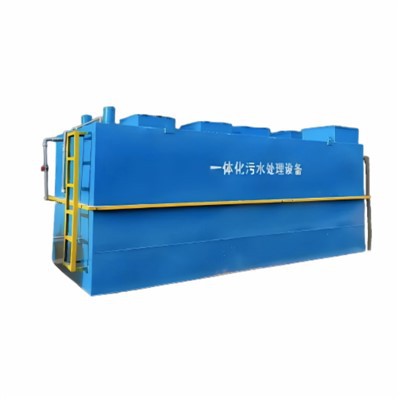
First off, let’s talk about why training is so important. Specialized wastewater treatment equipment is, well, specialized. It’s not like your average household appliances. These machines are designed to handle all sorts of funky stuff in wastewater, from chemicals to biological matter. If you don’t know how to operate them properly, you could end up with all kinds of problems, like equipment breakdowns, poor treatment results, or even environmental hazards.
One of the basic training requirements is understanding the equipment itself. You need to know what each part does, how it works, and how to troubleshoot common issues. For example, our equipment might have pumps, filters, and aeration systems. You’ve got to understand how the pumps move the wastewater through the system, how the filters remove solids, and how the aeration system helps with the biological treatment process.
A good training program will start with a detailed overview of the equipment. This could involve hands – on training where you get to see the equipment up close, touch the parts, and learn how to assemble and disassemble it if needed. You’ll also learn about the control panels. These panels are like the brains of the equipment. They let you adjust things like flow rates, temperature, and chemical dosages. Knowing how to read and operate these control panels is crucial for getting the best treatment results.
Another important aspect of training is safety. Working with wastewater treatment equipment can be dangerous. There are chemicals involved, and the equipment often operates at high pressures. You need to know how to handle chemicals safely, wear the right protective gear, and follow safety protocols to avoid accidents. For instance, if you’re handling disinfectants, you’ve got to know how to store them properly, how to mix them in the right concentrations, and how to dispose of any leftover chemicals safely.
Training also includes understanding the treatment processes. Different types of wastewater require different treatment methods. Some might need a lot of chemical treatment, while others rely more on biological processes. You need to know which method is best for the type of wastewater you’re dealing with and how to adjust the equipment accordingly. For example, if you’re treating industrial wastewater that has a high concentration of heavy metals, you’ll need to use a treatment process that can effectively remove those metals.
Now, let’s talk about the different levels of training. There are usually basic, intermediate, and advanced levels.
The basic level training is for folks who are new to operating the equipment. It covers the fundamentals, like the equipment layout, basic operation procedures, and safety rules. This level of training is often done in a classroom setting, with some hands – on demonstrations. It’s a great way to get a feel for the equipment and build a solid foundation of knowledge.
Intermediate training is for those who have some experience with the equipment. It delves deeper into the treatment processes, more advanced troubleshooting techniques, and how to optimize the equipment’s performance. At this level, you might start to work on real – world scenarios and learn how to make adjustments based on the specific characteristics of the wastewater.
Advanced training is for the experts. It’s all about the latest technologies, research, and innovation in wastewater treatment. You’ll learn about new treatment methods, how to integrate the equipment with other systems, and how to deal with complex wastewater issues. This level of training often involves attending conferences, workshops, and working on research projects.
As a supplier, we offer comprehensive training programs. Our team of experts is always on hand to provide in – person training at your facility. We can customize the training to meet your specific needs, whether you’re a small business or a large industrial plant.
We also provide online training resources. These resources include video tutorials, manuals, and FAQs. You can access these resources at any time, which is great if you want to review the training materials or learn at your own pace.
If you’re thinking about purchasing our specialized wastewater treatment equipment, we highly recommend that you take advantage of our training programs. It’ll save you a lot of headaches in the long run. Not only will you be able to operate the equipment safely and efficiently, but you’ll also get the best treatment results.

So, if you’re interested in our equipment and want to know more about our training programs, don’t hesitate to reach out. We’re here to help you make the right decision and ensure that you’re well – prepared to operate our equipment. Whether you’ve got questions about the training requirements, the equipment features, or the pricing, just drop us a line. We’re looking forward to hearing from you and working with you to solve your wastewater treatment problems.
Water Purification and Other Equipment References:
- "Wastewater Treatment: Principles and Design" by Metcalf & Eddy
- "Handbook of Industrial and Hazardous Wastes Treatment" by C.T. Chiueh
Shandong Lingke Environmental Technology Co., Ltd.
We’re well-known as one of the leading specialized wastewater treatment equipment manufacturers and suppliers in China, featured by quality products and good price. Please rest assured to buy durable specialized wastewater treatment equipment for sale here from our factory. Customized orders are welcome.
Address: 100 Meters South of the Intersection of County Road 042 and National Highway 309, Changle County, Weifang City, Shandong Province
E-mail: aileenlin@sdlingkegroup.com
WebSite: https://www.lkecotech.com/
